

If your yard turned into a pond after the last storm, you’re not alone, and it’s almost always fixable. Here’s the short version: stay safe, dry out anything that got wet within 24 to 48 hours, and then work out why the water had nowhere to go. In Chautauqua County, the answer is often dense, slow-draining soil combined with heavy storms. This guide covers what to do right now, why it happens here, the fixes that work, and when it’s time to call a pro.
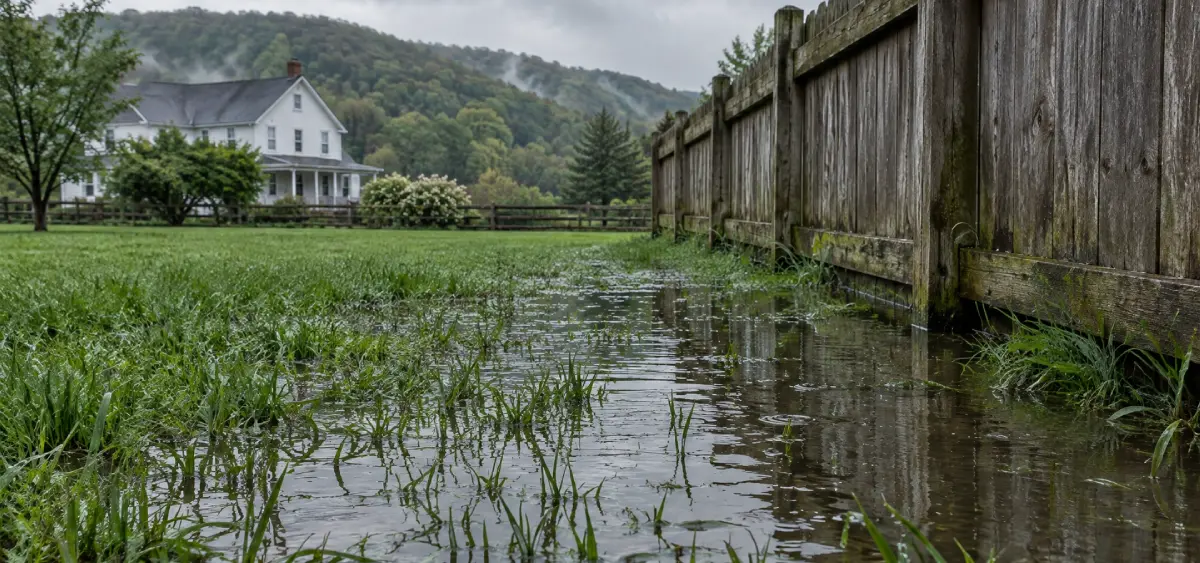
What to Do Right Now After Your Yard Floods
- Put safety first. The EPA says to check for loose power lines and gas leaks and make sure the electricity and gas are off before you go into a flooded area. Floodwater can carry sewage or chemicals, so avoid touching it.
- Take photos before you clean. The EPA also advises contacting your insurance company and taking pictures of your home and belongings before cleanup. Photograph where the water collected too.
- Get water away from the house. Use a wet vacuum on any water that got inside. Outside, point downspouts away from the foundation. Don’t pump or channel water onto a neighbor’s property.
- Dry everything fast. According to the EPA’s guide to mold cleanup after disasters, you should dry your home within 24 to 48 hours if you can. If you can’t, assume mold has started. Wear gloves, goggles, and at least an N-95 mask when handling wet or moldy items.
- Clear the paths. Clean out gutters, downspouts, and drain outlets so the next storm has somewhere to go.
- Take notes. Write down where the water pooled, how long it stayed, and which direction it came from. A pro will want to know.
Ask about insurance: many standard homeowners policies exclude flood and surface water damage. Call your agent before you throw anything away and ask what your policy covers.
Why Yards Flood
Most yard flooding comes down to water that has nowhere to go. These are the usual causes:
- Poor grading. The ground slopes toward your house instead of away from it.
- Compacted or dense soil. Water can’t soak in, so it sits on top.
- Low spots. Water collects in dips and kills the grass there.
- Short or missing downspout extensions. Roof water lands in one small area.
- Runoff from neighbors or slopes. Water from higher ground overwhelms your yard.
- Blocked or missing outlets. Even a good drain fails if it has nowhere to discharge.
Why Chautauqua County Yards Flood More Than Most
The soil holds water
Many people call local soil “clay.” Soil scientists have a more exact name. The USDA’s official description of the Volusia soil series says these soils formed in glacial till, with a dense layer called a fragipan just 10 to 22 inches below the surface. Internal drainage is “slow or very slow.” The series is extensive across the glaciated Allegheny Plateau of New York and northern Pennsylvania, and it was first described in Chautauqua County, in the Westfield area, in 1901. In plain terms, water soaks in a little, hits the dense layer, and sits. Not every yard has this, but many do.
Hills shed water and low ground collects it
McCandless crews describe hilly terrain that speeds up runoff. That water has to go somewhere. NRCS places Volusia soils on concave and flat landscape positions, and notes that even wetter soils sit on lower slopes and in depressions. So a hillside can send water down, and the flat or dished-out spot at the bottom holds it.
Heavy storms keep coming
Big rain events happen here. On August 23, 2026, a flash flood warning covered part of the county. The National Weather Service in Buffalo said Fredonia picked up nearly four inches of rain, and forecasters expected lake-effect rain the next day on top of it. In April 2025, thunderstorms also triggered flash flood warnings and reports of flooded basements. When a lot of rain falls on soil that drains slowly, yards flood.
Freeze and thaw shift the ground
McCandless crews also see freeze-thaw cycles shift yard grading every winter. A slope that drained well a few years ago can slowly start to hold water.
Quick Fixes You Can Do Yourself
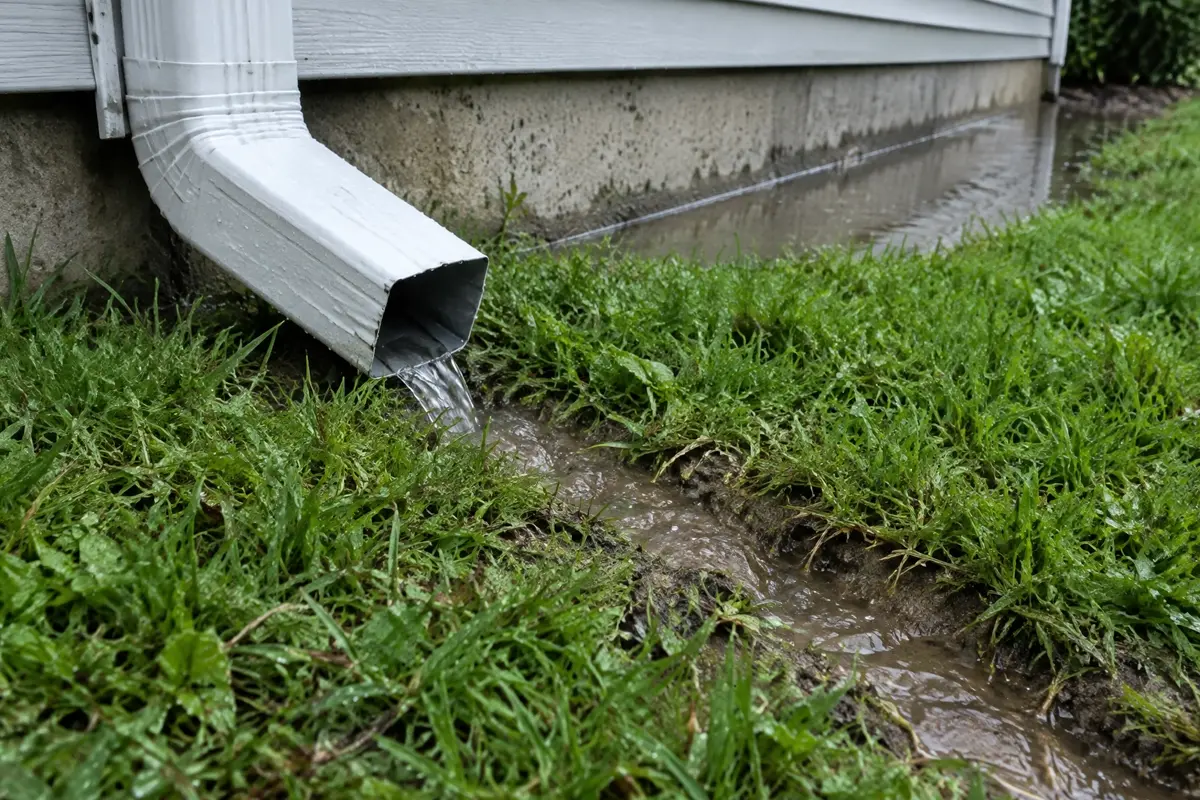
- Extend your downspouts. McCandless says effective fixes move water at least 10 feet from the foundation.
- Clean your gutters. Clogged gutters overflow right at the foundation.
- Fill and re-slope small low spots. The New York State Residential Code says the ground next to a house should fall at least 6 inches within the first 10 feet away from the foundation. Where that isn’t possible, it calls for drains or swales. That is a good target for a small regrading job.
- Keep outlets clear. Pull leaves and debris away from any drain outlet.
Before you dig, call 811: New York law requires a utility location request before you dig on your own property, even for a small job. Call 811 at least two, and no more than ten, full working days ahead. It’s free. If you hire a contractor, make sure they’ve made the call.
Permanent Solutions That Last
If a quick fix isn’t enough, these are the main options. McCandless installs all of them through its yard drainage solutions and drainage and excavation services.
| Fix | Best For | Cost and Notes |
| Grading correction | Water runs toward the house or collects in a low area | Simple regrading costs less than systems with underground piping |
| Downspout extensions and gutter fixes | Roof water dumping near the foundation | DIY-friendly. Water should end up at least 10 feet from the foundation |
| Swales, catch basins, and channel drains | Surface runoff that pools in problem areas | Yard drainage overall runs $1,500 to $8,000 |
| French drain | Groundwater, soggy areas, and foundation moisture | $20 to $30 per linear foot; $1,500 to $10,000 total |
| Dry well | Collecting runoff and letting it soak in slowly | Works only where the soil will absorb water |
| Sump pump | Water that reaches the basement | Works best paired with exterior drainage |
How a French drain works
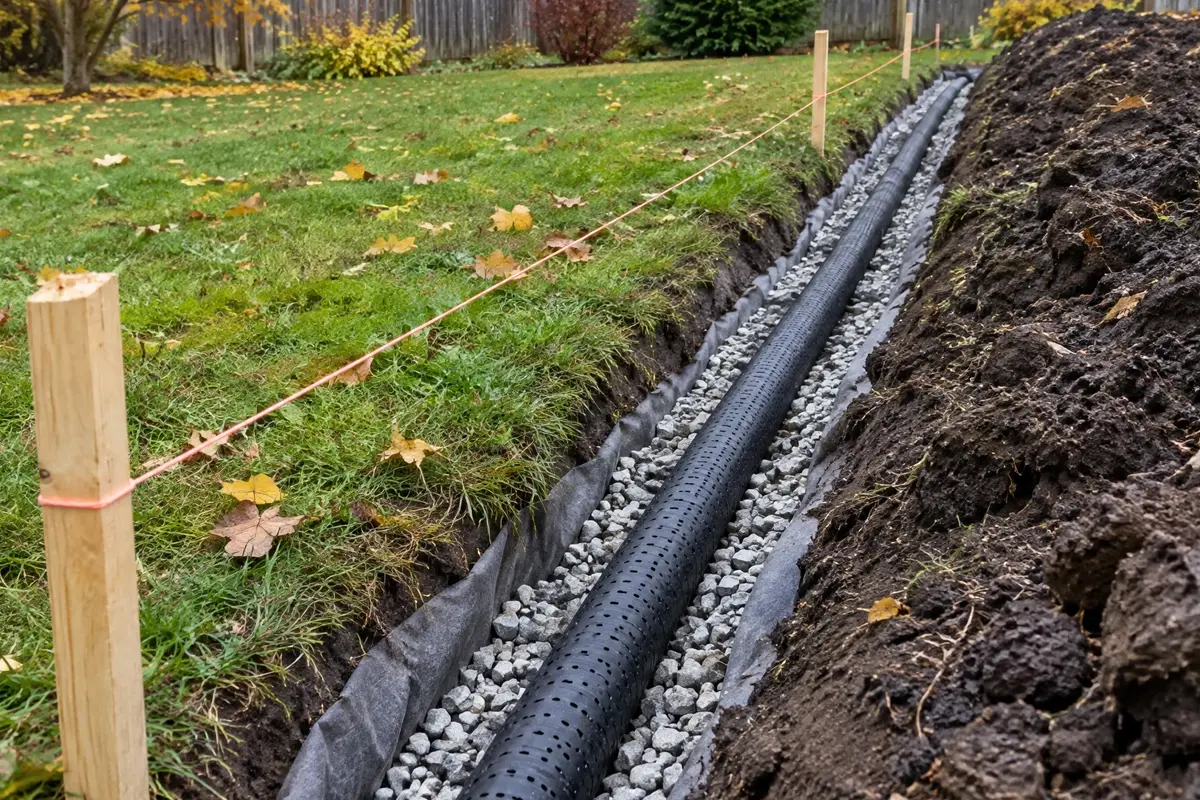
A French drain is a trench with a perforated pipe set in gravel and wrapped in filter fabric. It slopes toward an outlet, so groundwater flows into the pipe and away from the problem area. McCandless says yard drains usually run 18 to 24 inches deep, while foundation drains typically run 6 to 8 feet deep.
A word about dry wells
A dry well collects runoff and lets it soak into the ground. In slow-draining soil, it may not empty between storms. Ask a pro to check how fast your soil drains before you choose one.
What it costs and how long it lasts
McCandless lists yard drainage at $1,500 to $8,000, depending on how bad the problem is, how complex the solution is, and the size of the property. French drains run $20 to $30 per linear foot, with total projects from $1,500 to $10,000. The company says quality systems typically last 15 to 25 years with proper installation and maintenance. Your own price depends on your site, so get an estimate.
If water also reaches your basement, a sump pump adds another layer of protection. It works best when paired with exterior drainage, because it handles water that has already gotten in.
DIY or Call a Pro? A Simple Guide
Use this table to decide. When in doubt, a free estimate costs nothing.
| Your Situation | DIY or Pro? | What to Do |
| Downspouts are short, clogged, or dump next to the house | DIY | Clean the gutters and add extensions that carry water at least 10 feet away |
| A small low spot with a shallow puddle after storms | Maybe DIY | Add soil and re-slope the area so the grade falls away from the house |
| Water pools against the foundation or gets into the basement | Call a pro | This can threaten the foundation and needs the cause diagnosed |
| The same spot floods in every big storm | Call a pro | The fix depends on whether it’s surface runoff or groundwater |
| The fix needs a trench | Call a pro | Slope, depth, and outlet all matter. Call 811 before anyone digs |
| Erosion, washouts, or a steep slope | Call a pro | These usually need grading and a designed drainage path |
| Runoff from a neighbor, or work near a property line | Call a pro | Larger systems near property lines may need approval |
| A wet spot when it hasn’t rained, with a bad smell or slow drains | Call a pro | It may be a leak, sewer line, or septic problem, not a drainage problem |
Digging is where most DIY jobs go wrong. A trench needs the right slope, depth, and outlet. McCandless handles that with its excavation services and checks local requirements. McCandless says most residential French drains don’t need a permit, but larger systems or work near property lines may need approval.
When a Wet Yard Isn’t Really About Rain
Sometimes a soggy spot has nothing to do with the weather. Be suspicious if you see a wet or sunken area when it hasn’t rained, a sewage smell, unusually green or lush grass in one strip, or slow drains inside. A buried pipe or septic system may be the cause. These guides can help you tell:
- 7 signs of a failing water line in Chautauqua County
- Signs you need sewer line replacement in Western New York
- Our septic system inspections for soggy areas near a drain field
What a Drainage Assessment Looks Like
A good assessment starts with the site, not a sales pitch. This is how McCandless approaches it:
- Site analysis. We look at your land, soil, and how water moves across the property.
- A custom plan. We design a system for your specific problem, working with landscape contractors when needed.
- Permits. When a permit is required, we handle it.
- Careful installation. Crews install to manufacturer specs and local codes.
- Testing and adjusting. We test how the system performs and fix anything that needs it.
We serve Jamestown, Dunkirk, Fredonia, Lakewood, Westfield, Falconer, Bemus Point, Mayville, and Findley Lake. See our Jamestown service page for more, or read what to know before you hire an excavation contractor in Jamestown.
Frequently Asked Questions
Why does my yard flood every time it rains?
Usually water has nowhere to go. In Chautauqua County, that often means soil with a dense layer that drains slowly, plus grading that holds water or points it toward the house. A pro can tell you which it is.
Is a flooded yard a sign of foundation problems?
It can be. Water that pools against your foundation can cause moisture problems and, over time, structural damage. If water is gathering next to the house or getting into the basement, have it looked at.
How much does it cost to fix yard drainage?
McCandless lists yard drainage at $1,500 to $8,000 and French drains at $20 to $30 per linear foot, with total projects from $1,500 to $10,000. Your price depends on the cause, the size of the area, and the type of system.
Do I need a French drain, or is regrading enough?
It depends on the source of the water. Surface problems often need grading and catch basins. Groundwater problems usually need a French drain. Many yards need a mix of both.
Will homeowners insurance cover yard flooding?
Many standard homeowners policies exclude flood and surface water damage. Ask your agent what yours covers, and take photos of the damage before you clean up.
Can I fix yard drainage myself?
Simple jobs like cleaning gutters and extending downspouts are good DIY projects. Anything that needs a trench, a slope calculation, or work near a property line is better left to a pro. Always call 811 before you dig.
Do I need a permit for a French drain?
McCandless says most residential French drains don’t need a permit, but larger systems or those near property lines may need approval. It checks local requirements for you.
A flooded yard is stressful, but it has a cause, and the cause has a fix. Stay safe, dry things out, and work out where the water is coming from. Then match the fix to the problem. Do the simple things yourself and bring in a pro for anything that needs digging.
McCandless Plumbing & Excavation: Family-Owned, Serving Chautauqua County Since 1975
McCandless Plumbing & Excavation is a licensed, insured family business based in Jamestown, NY. It handles plumbing, sewer, septic, drainage, and excavation work for homes and businesses across Chautauqua County and Western New York.
Call (716) 403-2478 to schedule a drainage estimate or ask about your yard.
Yard still holding water?
Schedule a free drainage estimate. We’ll look at your grading, soil, and water flow, then recommend the simplest fix that will actually last.
Get a Free Drainage Estimate | (716) 403-2478