

Installing a septic tank is one of the most important projects a homeowner in Chautauqua County, NY can face. This guide walks you through the full installation process step by step, including soil perc testing, county permit requirements, excavation, tank placement, leach field installation, inspection, and final sign-off. We also provide realistic local cost ranges and reference the New York State Department of Health Part 75 regulations and Chautauqua County Health Department requirements. For expert assistance, McCandless septic system services can guide you through a site assessment and permit guidance. This article breaks down the process into clear, actionable steps so you can plan with confidence.
Key Takeaways
- A typical installation includes a soil percolation test, securing county permits, excavation, tank and leach field placement, and final inspection.
- Permits are required from the Chautauqua County Health Department and must comply with NY Health Department Part 75.
- Installation costs in Chautauqua County typically range from $4,500 to $10,000 depending on soil conditions and system complexity.
- Excavation costs vary from $500 to $3,000 based on site difficulty and preparation needs.
- Routine maintenance, including pumping every 3–5 years, is essential to avoid failures and costly repairs.
- Early warning signs of system issues include slow drains, gurgling pipes, odors, or wet spots near the drain field.
- Proper siting and soil quality protect groundwater and improve system performance.
- Correct plumbing and drainage connections prevent backups and ensure efficient operation.
Step-by-Step Septic System Installation Process in Chautauqua County
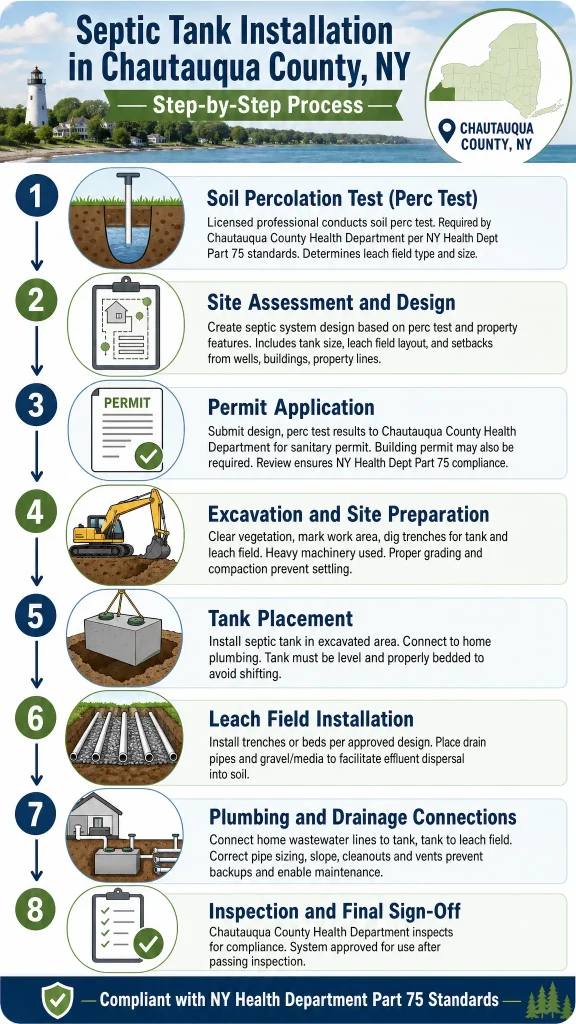
Step 1: Soil Percolation Test (Perc Test)
A licensed professional conducts a soil perc test to evaluate the soil’s absorption rate and suitability for a septic system. This test is required by the Chautauqua County Health Department and must meet standards set by NY Health Department Part 75. The results determine the type and size of the leach field needed.
Step 2: Site Assessment and Design
Based on the perc test and property features, a septic system design is created to comply with local regulations. This includes tank size, leach field layout, and setbacks from wells, buildings, and property lines.
Step 3: Permit Application
Submit the system design, perc test results, and other required documents to the Chautauqua County Health Department to apply for a sanitary permit. Depending on the project scope, a building permit may also be required. The health department reviews the application to ensure compliance with NY Health Department Part 75 standards for water and waste systems and local codes.
Step 4: Excavation and Site Preparation
Once permits are approved, excavation begins. This involves clearing vegetation, marking the work area, and digging trenches for the tank and leach field. Heavy machinery is typically used. Proper grading and compaction are critical to prevent settling and ensure system longevity. Learn more about our excavation and site preparation services in Chautauqua County.
Step 5: Tank Placement
The septic tank is installed in the excavated area and connected to the home’s plumbing. The tank must be level and properly bedded to avoid shifting.
Step 6: Leach Field Installation
Trenches or beds for the leach field are installed according to the approved design. Drain pipes and gravel or other media are placed to facilitate effluent dispersal into the soil.
Step 7: Plumbing and Drainage Connections
The home’s wastewater lines are connected to the septic tank, and the tank is connected to the leach field. Pipes must be correctly sized, sloped, and fitted with cleanouts and vents to prevent backups and allow maintenance. For related drainage work, our drainage and excavation services address site-wide water management.
Step 8: Inspection and Final Sign-Off
The Chautauqua County Health Department inspects the installation to verify compliance with permits and regulations. After passing inspection, the system is approved for use. For pre-purchase or routine checks, see our septic system inspection services.
Necessary Permits and Regulations

Before any work begins, homeowners must secure the appropriate permits from the Chautauqua County Health Department. These permits ensure the system meets health and environmental standards and complies with NY Health Department Part 75 regulations.
- Sanitary Permit: Required for all new septic system installations. The application includes soil test results, system design, and site plans.
- Building Permit: May be required depending on the scope of work and local building codes.
- Inspections: Scheduled inspections during and after installation ensure compliance and system safety.
Cost Guide for Septic Installation in Chautauqua County
Costs vary based on soil conditions, system type, and local fees. Below are typical ranges for Chautauqua County:
| Component | Cost Range |
|---|---|
| Soil Perc Test | $300 – $700 |
| Septic Tank | $3,000 – $7,000 |
| Excavation | $500 – $3,000 |
| Permits and Inspections | $100 – $500 |
| Total Installation Cost | $4,500 – $10,000 |
These figures reflect typical expenses in Chautauqua County. Soil testing, system complexity, and contractor availability can affect final bids.
Factors Influencing Costs
- Soil Conditions: Rocky or saturated soils may require alternative systems or additional excavation, increasing costs. For a full breakdown of what homeowners typically pay, see our septic tank installation cost guide for Western NY.
- System Type: Conventional gravity systems are generally less expensive; alternative systems like mound or aerobic systems cost more but may be necessary for challenging sites.
- Labor and Equipment: Local labor rates and equipment needs impact pricing.

Maintenance Recommendations
Proper maintenance extends system life and prevents costly repairs.
- Regular Pumping: Pump the tank every 3–5 years based on household size and tank capacity. Schedule regular septic tank pumping near you to stay ahead of buildup and prevent system overload.
- Monitor for Failure Signs: Watch for slow drains, odors, gurgling sounds, or wet areas near the drain field. Review our guide on signs your septic system is failing in Chautauqua County to know when to call a professional.
- Best Practices: Avoid flushing wipes or grease, conserve water, and keep heavy vehicles off the drain field.
Conclusion
Understanding the full septic system installation process, from soil perc testing through final inspection, helps homeowners in Chautauqua County make informed decisions and protect their property. Securing the proper permits from the Chautauqua County Health Department and complying with NY Health Depa