

Quick Answer: Water line replacement costs $2,000 to $5,000 on average for a standard residential service line nationally, with the actual price depending heavily on line length, depth, access, and whether the line runs under hardscaping. Trenchless replacement runs $70 to $250 per linear foot; open-cut excavation runs $50 to $200 per linear foot for the pipe work alone, plus restoration. In Western New York and Chautauqua County, deeper frost-line requirements (typically 48 to 54 inches) and older galvanized or deteriorated pipe stock in homes built before 1960 push costs toward the higher end of national ranges. McCandless Plumbing & Excavation provides free estimates for water line work throughout Western NY.
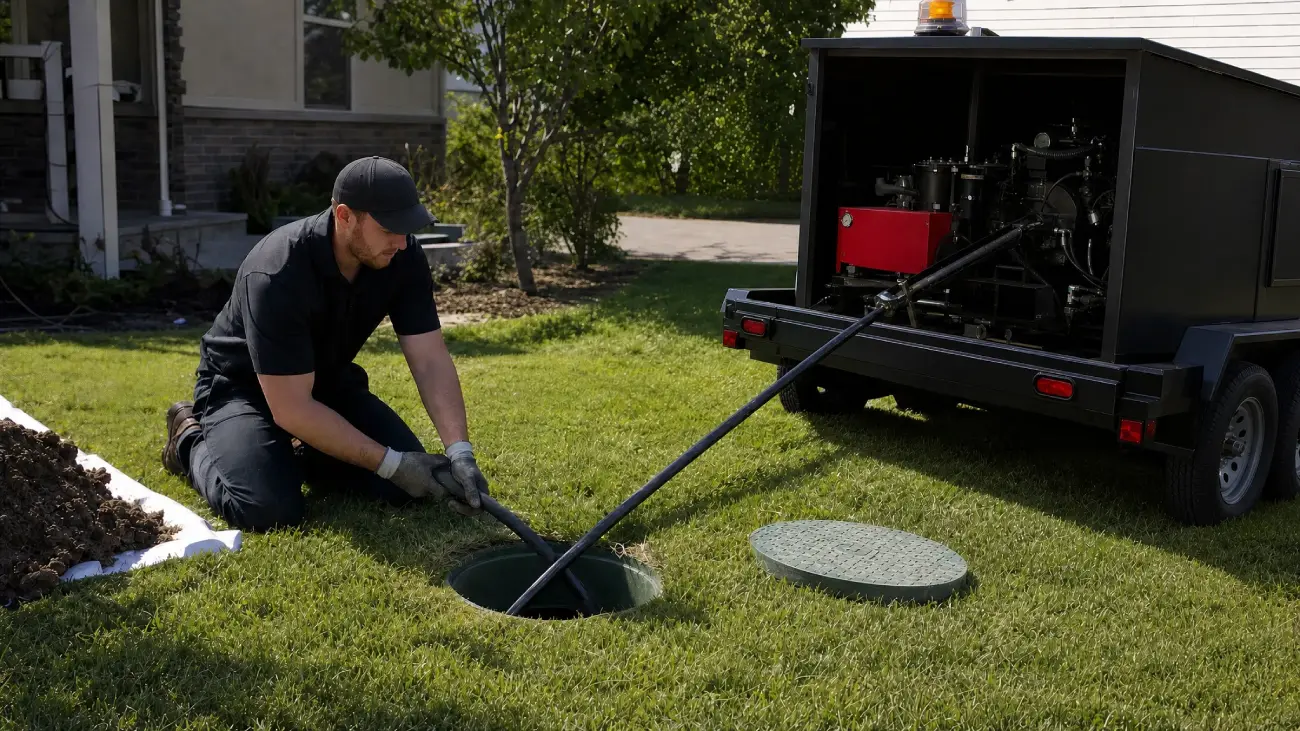
Water line replacement is one of those home repair costs that most homeowners have never had to deal with and have no frame of reference for pricing. When it comes up — because of a leak, a sudden drop in pressure, a water quality concern, or a home inspection flag — the quotes they receive often come as a surprise.
The national average gives a starting point but doesn’t tell the full story. Cost varies significantly based on factors that are specific to your property: how long the line is, how deep it runs, what’s in the way, and what method is used to replace it. For Western New York homeowners in Chautauqua County and the surrounding region, the specific conditions here — deep frost lines, older housing stock, and the range of terrain from lakeside properties to inland rural lots — mean the actual cost range for your project may differ from what a national average suggests.
McCandless Plumbing & Excavation provides plumbing and excavation services throughout Western NY, including water line replacement. This guide covers what drives the cost, how trenchless and open-cut methods compare, when to repair versus replace, and what homeowners here specifically need to budget for.
What Does Water Line Replacement Actually Include?
Before looking at costs, it helps to understand what a water line replacement project actually involves. The water service line is the pipe that runs from the municipal water main at the street (or your well, in Chautauqua County’s rural areas) to the point where it enters your home. This line is the homeowner’s responsibility — the municipality maintains the main, but the service line from the main to the home is yours.
A replacement project typically involves:
- Shutting off water service at the street or well
- Excavating to access the old pipe (or using trenchless access methods)
- Removing the old pipe
- Installing new pipe — typically copper or HDPE depending on the method and municipality requirements
- Connecting to the water main tap at the street and the home shutoff at the house
- Restoring any disturbed surface — backfill, compaction, lawn restoration, concrete or asphalt repair if applicable
- Pressure testing to confirm the line is sealed and functioning correctly
- Permit acquisition and municipal inspection where required
How Much Does Water Line Replacement Cost? Price Ranges by Scenario
| Scenario | Method | Typical Range | Notes |
|---|---|---|---|
| Short line, easy access (50 ft) | Open-cut | $1,500–$3,500 | Open lawn, accessible, minimal restoration |
| Standard residential line (75–100 ft) | Open-cut | $3,000–$7,000 | Includes basic lawn restoration |
| Line under driveway or concrete | Trenchless | $4,000–$10,000 | Avoids concrete removal and replacement |
| Long line (100–150+ ft) | Either | $6,000–$15,000+ | Cost scales with footage and restoration scope |
| WNY deep frost line (48–54 in. burial) | Open-cut | Add $15–30/ft to labor estimate | Deeper excavation increases labor cost |
These ranges reflect 2026 pricing conditions. The most important thing to understand is that the per-foot pipe cost is only part of the project. For open-cut excavation, restoration costs — lawn repair, concrete replacement, landscaping — can add $1,500 to $4,000+ and are often left out of initial quotes. Always ask for an all-in estimate that includes permit costs, restoration, and any municipal inspection fees.
Trenchless vs. Open-Cut: How the Methods Compare for Western NY Projects
This is the decision that most significantly affects both cost and disruption for your project. The two approaches are fundamentally different in how they access and replace the pipe.
Open-Cut Excavation
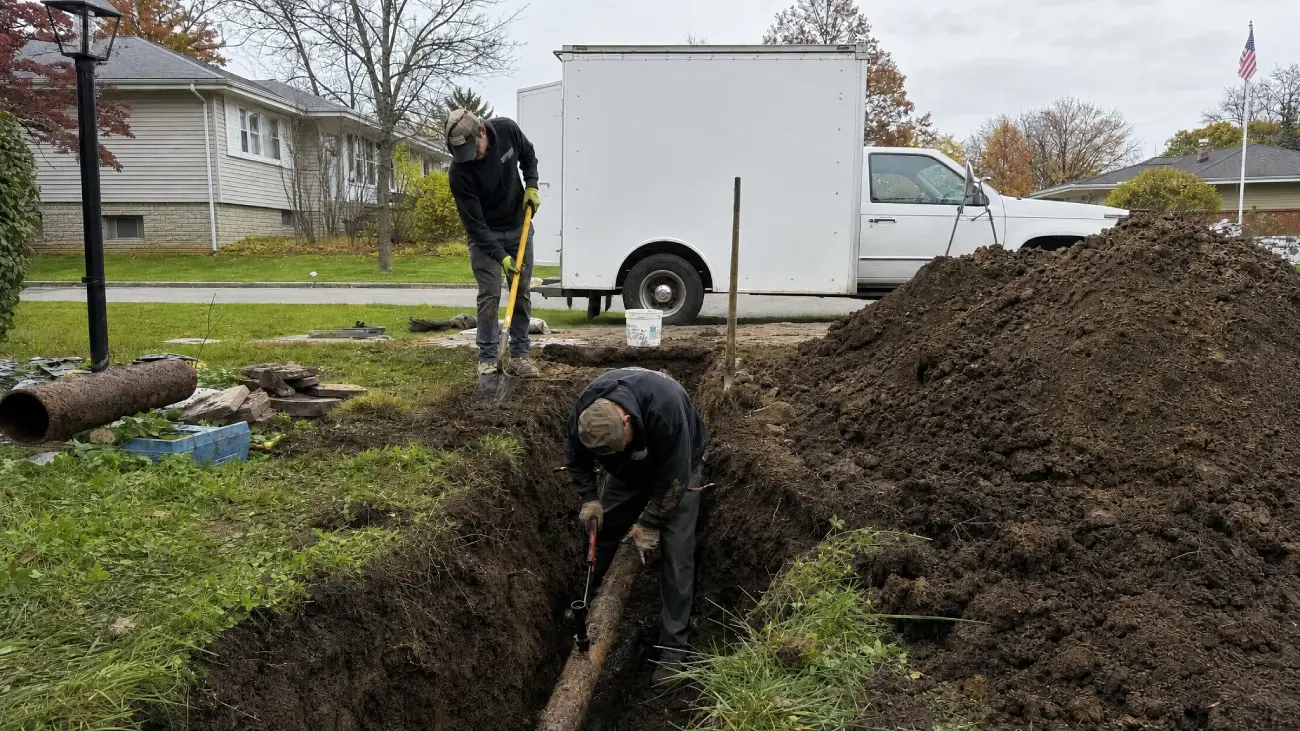
Traditional open-cut replacement excavates a trench along the full length of the pipe run, removes the old pipe, installs new pipe, and backfills the trench. It is straightforward and flexible — it works for any pipe condition, allows the installer to see what’s there, and is often the least expensive approach for the pipe work itself when the site is easy to access.
The catch is restoration. A trench dug across a front yard in Chautauqua County requires backfill, compaction, lawn restoration, and seeding. A trench through a concrete driveway requires concrete saw-cutting, removal, new concrete pour, and a cure period. These restoration costs add up quickly — and are sometimes not included in an initial quote because they depend on what the excavation actually encounters.
Western NY consideration: Chautauqua County’s frost line depth requirement of 48 to 54 inches below grade means excavation is deeper here than in milder climates. Deeper trenches require more excavation time and more backfill material, which increases labor cost per foot relative to the national average.
Trenchless Replacement
Trenchless water line replacement uses one of two methods — pipe bursting (where a hydraulic head is pulled through the old pipe, fracturing it outward while simultaneously pulling new HDPE pipe into place) or directional boring (where new pipe is drilled through the ground alongside the existing pipe route).
Trenchless requires access pits at each end of the pipe run rather than a full-length trench — two approximately 4×4 ft pits rather than a 50 to 150 ft trench. The pipe work itself typically costs more per foot than open-cut, but the project eliminates most or all of the restoration costs. For a line that runs under a driveway, a patio, or a mature landscaping bed, the trenchless method almost always produces a lower total project cost despite the higher per-foot pipe price.
When trenchless wins on total cost: If your water line runs under a concrete driveway, avoiding the open-cut approach eliminates the need to saw-cut, remove, and replace the concrete — a cost that typically runs $1,500 to $4,000 by itself. Even at a higher per-foot pipe price, trenchless delivers lower total cost in this scenario. McCandless can provide side-by-side estimates for both methods when trenchless is applicable.
What Factors Specifically Affect Cost in Western NY and Chautauqua County?
National cost data is a starting point, but these Western NY-specific factors affect where your project lands:
- Frost line depth: New York State requires water service lines to be buried a minimum of 48 inches below grade in most of Chautauqua County (some areas require deeper burial). This is significantly deeper than southern states, and deeper excavation means more labor time and material per foot of line replaced.
- Older pipe materials: Homes built before 1960 in Western NY frequently have galvanized steel water service lines. Galvanized pipe corrodes from the inside as it ages, progressively narrowing the interior diameter and eventually failing from through-wall corrosion. Removing older galvanized pipe in deteriorated condition is more labor-intensive than removing modern copper or HDPE lines.
- Terrain variation: Properties in Chautauqua County range from lakeshore lots to inland rural properties with sloped terrain. Rocky soil conditions, high water tables near the lake, and sloped excavation all increase project complexity and cost compared to flat, accessible suburban lots.
- Municipal permit requirements: Requirements vary by municipality. Some Chautauqua County communities require licensed plumbers, permits, and municipal inspections for water line work. McCandless handles permit coordination and inspection scheduling as part of the project.
When Should You Repair vs. Replace Your Water Line?
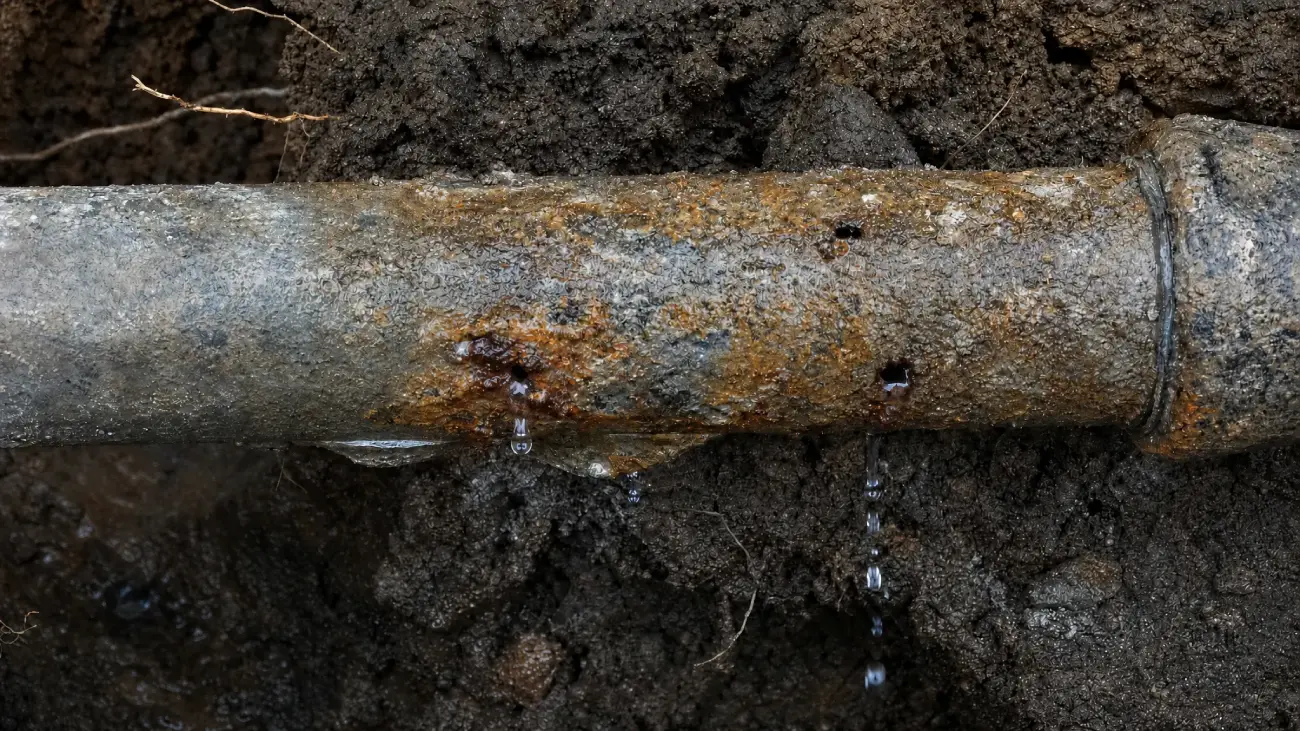
Not every water line problem requires full replacement. Here’s how to think about the decision:
Repair makes sense when:
- The damage is isolated — a single joint failure, one small section of corrosion, one leak point — and the rest of the line is in good condition
- The line is relatively new (under 20 years old) and made of copper or HDPE
- A camera inspection or pressure test confirms the isolated nature of the damage
Replacement is the better long-term investment when:
- The line is galvanized steel — galvanized pipe degrades throughout its full length as it ages, and repairing one section leaves the rest of the line vulnerable to the next failure
- There have been multiple failures or repairs in recent years — repeated emergency service calls add up to more than replacement would have cost
- Water pressure at the home has been consistently lower than normal — a sign of internal corrosion narrowing the pipe diameter throughout the line
- The line is more than 50 years old — at that point, the risk of imminent failure elsewhere in the line makes full replacement more cost-effective than repeated repairs
- A home inspection has flagged the line for replacement — for property transactions, this is better addressed proactively than discovered in an emergency
Does Homeowner’s Insurance Cover Water Line Replacement?
Standard homeowner’s insurance policies typically exclude water service line replacement from coverage because service lines are considered maintenance items — deterioration over time is not a covered peril in most policies. This surprises many homeowners when they discover it during an emergency. For more on national cost benchmarks, see HomeGuide’s water line replacement cost guide.
However, many insurers offer an optional service line endorsement — a rider that specifically covers water service line damage and replacement. These endorsements typically cost $50 to $100 per year and can cover several thousand dollars in replacement costs. Some utilities and municipalities also offer service line protection programs. It is worth reviewing your current policy and asking your insurer about this coverage before a failure occurs.
If a failure is caused by an event covered under your policy — for example, a burst line caused by a sudden, unexpected freeze — there may be coverage for the resulting damage to the home. Document any damage thoroughly with photos and contact your insurer before beginning cleanup or repair.
TL;DR — Water Line Replacement Cost Guide
- National average: $2,000–$5,000 for a standard residential service line replacement.
- Trenchless: $70–$250 per linear foot. Best when the line runs under hardscaping — avoids $1,500–$4,000+ in restoration costs.
- Open-cut: $50–$200 per linear foot plus restoration. Best for easy-access runs with minimal hardscaping.
- Western NY factors: deep frost-line burial (48–54 in.), older galvanized pipe stock, and terrain variation push costs toward the higher end of national ranges.
- Repair works for isolated damage on newer pipe. Replace when the line is galvanized, aging, or has had multiple failures.
- Standard homeowner’s insurance usually doesn’t cover water line replacement — ask about a service line endorsement.
- Contact McCandless Plumbing & Excavation for a free water line estimate in Chautauqua County and Western NY.
Frequently Asked Questions
How much does water line replacement cost?
Water line replacement costs $2,000 to $5,000 on average nationally for a standard residential service line. The actual price depends on line length, depth, access, method, and restoration scope. Trenchless methods run $70 to $250 per linear foot; open-cut excavation runs $50 to $200 per linear foot for the pipe work plus restoration costs. In Western New York, deeper frost-line requirements and older pipe materials can push costs toward the higher end of these ranges. McCandless Plumbing & Excavation provides free on-site estimates for Chautauqua County and Western NY projects.
What factors make water line replacement more expensive?
The main cost drivers are: longer line length, greater burial depth (Western NY requires 48 to 54 inches minimum), presence of concrete or hardscaping over the line, difficult soil conditions (rock, high water table), older pipe material requiring more careful removal, and permit requirements. Restoration costs — lawn repair, concrete replacement, paving — are a significant and often underestimated component of open-cut projects.
Is trenchless water line replacement worth it?
Trenchless is worth it when the line runs under a driveway, concrete, or expensive hardscaping — because it eliminates the $1,500 to $4,000+ cost of disturbing and restoring those surfaces. Even with a higher per-foot pipe cost, the total project cost is often comparable or lower. For lines under open lawn with easy access, open-cut excavation may be the simpler and less expensive option. McCandless evaluates both options on each project and recommends the approach that provides the best total value.
When should I repair vs. replace a water line?
Repair is appropriate for isolated damage on a line that is otherwise in good condition. Replacement is the better investment when the line is galvanized steel (common in pre-1960s Western NY homes), when there have been multiple failures in recent years, when water pressure has been consistently dropping, when the line is over 50 years old, or when a home inspection has flagged the line. Repeatedly repairing an aging galvanized line typically costs more over time than full replacement.
Does homeowner’s insurance cover water line replacement?
Standard policies typically exclude water service line replacement due to wear and deterioration. Many insurers offer an optional service line endorsement that covers this work — typically $50 to $100 per year in additional premium. It’s worth reviewing your policy and asking about this coverage before you need it. Some utilities and municipalities also offer service line protection programs.
Related Guides
- McCandless Plumbing & Excavation — Water Line Services
- Water Line Repair in Jamestown, NY
- Main Water Line Replacement Cost in NY (2026)
- Case Study: 110 Wilson Place Water Line Replacement
Need a Water Line Estimate in Western NY? Contact McCandless
McCandless Plumbing & Excavation provides water line replacement, repair, and excavation services throughout Chautauqua County and Western New York. Whether your line has failed or you’re being proactive about aging galvanized pipe, our team provides free on-site estimates with transparent, all-in pricing. Get a free estimate from McCandless Plumbing & Excavation today.
About McCandless Plumbing & Excavation | McCandless Plumbing & Excavation provides plumbing, water line replacement, excavation, and sewer services throughout Chautauqua County and Western New York. Specializing in residential and light commercial water service line replacement — trenchless and traditional — plus sewer repair and full excavation services. Licensed, insured, locally owned, and serving Western NY communities.