

Quick answer: Water line repair in Jamestown, NY typically costs $500 to $2,000 for targeted spot repairs and $3,000 to $7,000 or more for full replacement. The main warning signs of a failing water line include unexplained spikes in your water bill, wet spots in your yard during dry weather, discolored tap water, and low water pressure throughout your home. Many Jamestown homes built before 1970 still have original galvanized steel or lead service lines that are well past their service life — making early detection and a professional assessment critical.
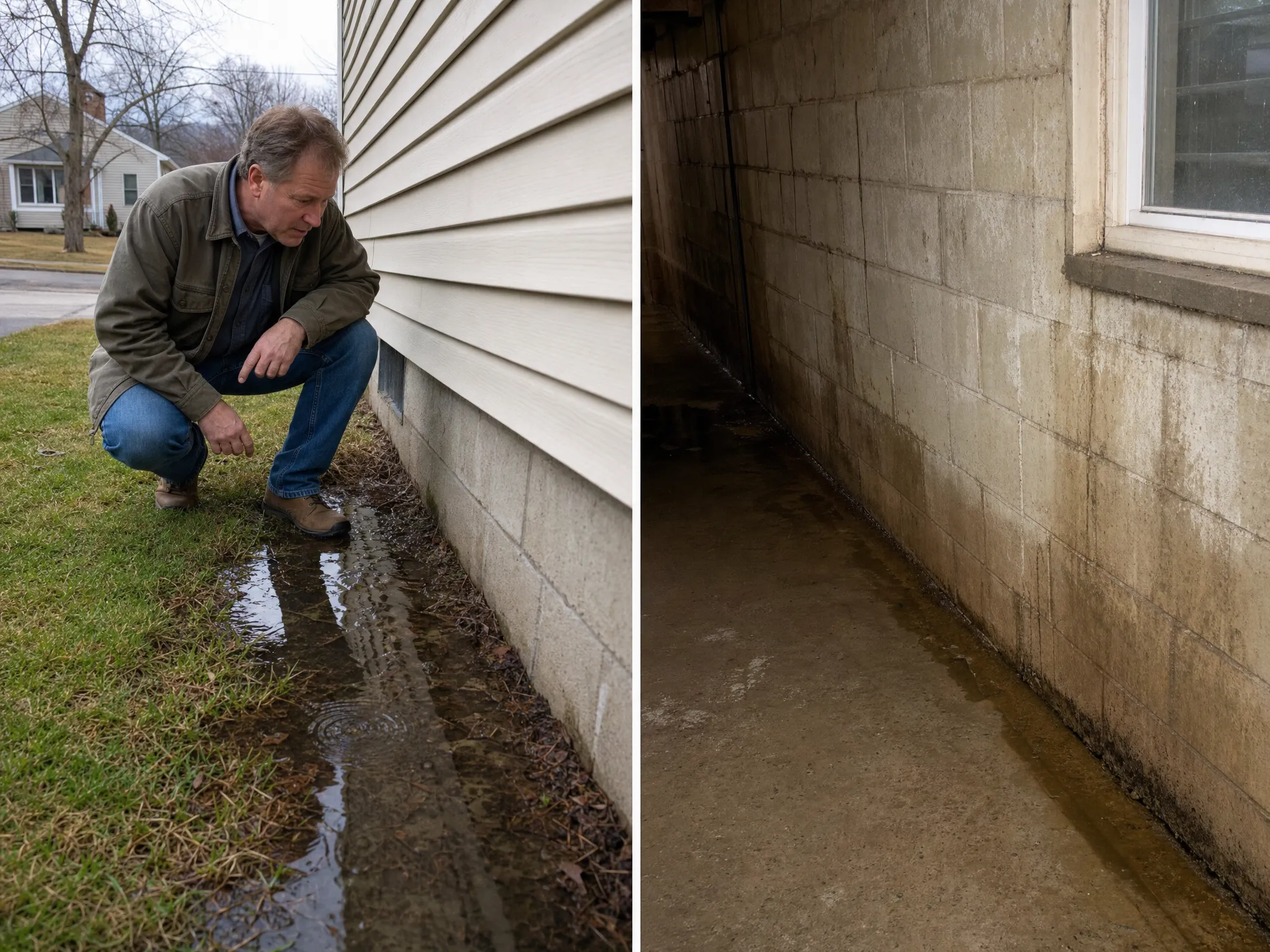
Your main water line does a thankless job. Buried underground between the city main and your house, it delivers every drop of water your family uses — and most Jamestown homeowners never think about it until something goes wrong.
When a water line starts to fail, the signs are often easy to miss or easy to write off as something else: a higher-than-usual water bill, a mysteriously soggy patch of lawn, a slight drop in shower pressure. By the time the damage becomes obvious, the repair costs are already climbing.
This guide covers everything Jamestown homeowners need to know about water line repair: the warning signs that something is wrong, what causes water lines to fail in Chautauqua County, what repairs cost, and how to decide whether a repair or full replacement is the smarter move.
What Are the Warning Signs That Your Water Line Is Failing?
Most water line failures don’t happen overnight. They develop slowly, and your home gives you plenty of clues before things get serious. Knowing what to look for can save you thousands.
Why Is My Water Bill Suddenly Higher?
An unexplained spike in your monthly water bill is one of the clearest early indicators of a leak. If your usage habits haven’t changed but your bill has jumped — especially during the winter and early spring months when freeze-thaw stress is highest in Western NY — a buried leak is worth investigating.
A slow underground leak can waste hundreds of gallons per day without any visible sign inside your home. The first place most Jamestown homeowners notice it is on their utility bill.
What Do Wet Spots in My Yard Mean?
Soggy patches, soft depressions, or unusually lush green areas of grass — particularly along the line from your meter to your house — often signal a slow underground leak. In Chautauqua County, where seasonal freeze-thaw cycles place ongoing stress on buried pipes, small cracks can open up in late winter and early spring.
If you’re noticing wet areas during a dry stretch with no rain, don’t ignore them. A quick call to a licensed plumber can confirm or rule out a water line issue before it turns into a major excavation job.
Why Is My Water Discolored or Rusty?
Discolored, brown, or rust-tinted water coming from your taps is a red flag. In older Jamestown homes — particularly those built in the 1950s and 1960s — original galvanized steel or cast-iron service lines have been corroding for decades. When corrosion advances or a pipe crack allows soil to enter the line, it shows up in your water.
Discolored water is more than a cosmetic issue. It can signal a serious contamination risk to your drinking water supply and should be evaluated by a licensed plumber promptly.
What Does Low Water Pressure Throughout My Home Mean?
A sudden drop in water pressure at every fixture in your home — not just one sink or shower — often points to a problem with the main supply line rather than an interior pipe. Corrosion buildup inside aging galvanized pipes gradually reduces the interior diameter over time, restricting flow. A crack or partial break can have the same effect.
If the pressure drop is house-wide, it’s worth ruling out a main line issue before spending money on interior plumbing.
What Other Signs Should I Watch For?
Additional warning signs to watch for include:
- Visible corrosion or rust at the meter connection or where the line enters your foundation
- Sinkholes, soft ground, or small craters forming near the water meter
- A hissing or rushing sound near the main line when no water is running inside
- Reduced water quality or taste changes with no obvious indoor source
💡 Pro Insight: Many Jamestown homeowners assume low pressure means a problem with their city water supply. In most cases, when pressure drops at every fixture in the house simultaneously, the issue is on the homeowner’s side of the meter — and the homeowner is responsible for diagnosis and repair.
What Causes Water Lines to Fail in Jamestown, NY?
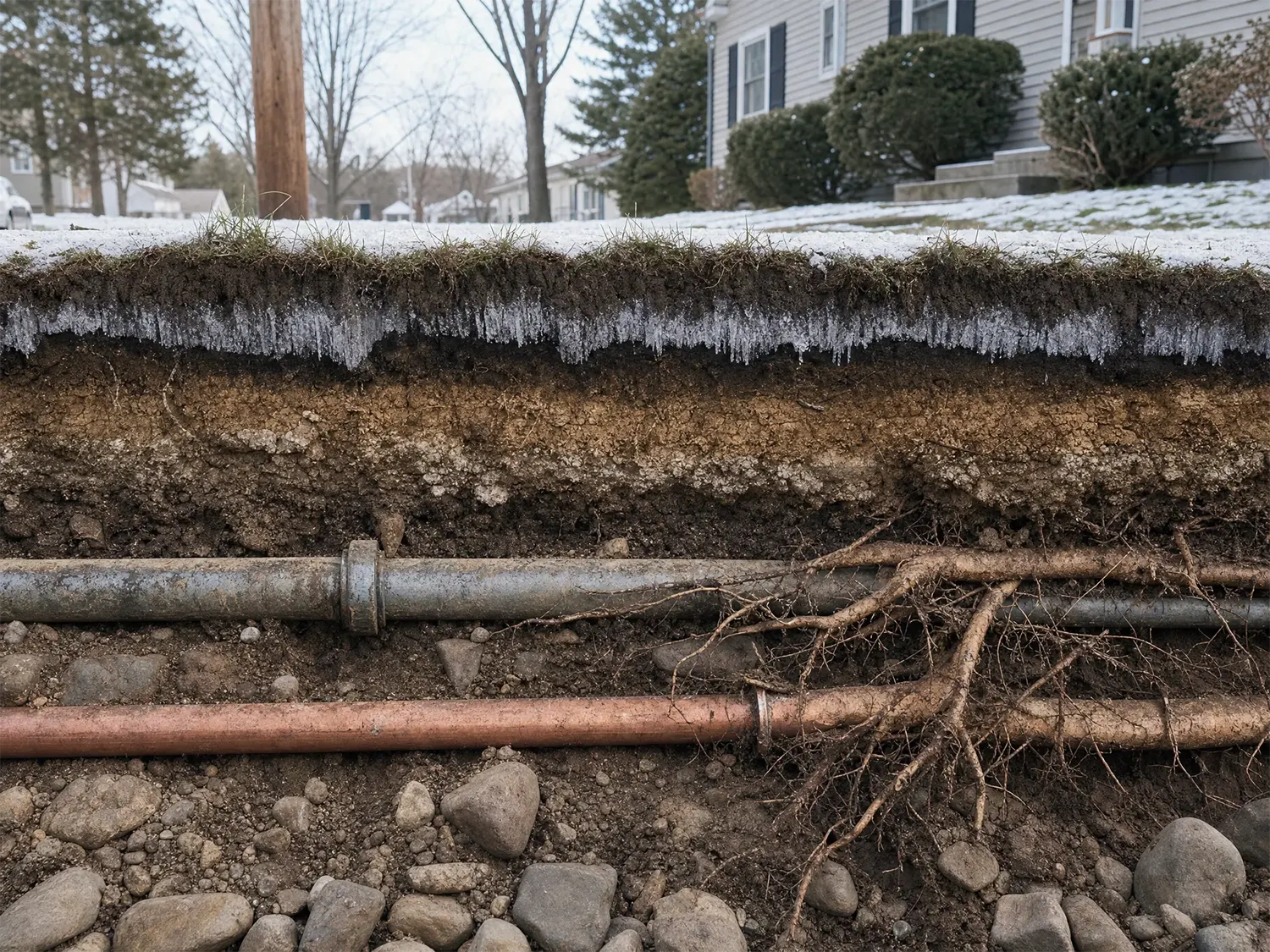
Understanding why water lines fail in Chautauqua County helps you assess your own risk — and know when to act.
How Does the Freeze-Thaw Cycle Affect Water Lines?
Western NY winters are hard on buried infrastructure. Jamestown regularly sees below-zero temperatures followed by rapid warm-ups throughout January, February, and March. This repeated freeze-thaw cycle causes soil to contract and expand — which places significant lateral stress on buried pipes, particularly at joints and connection points.
Lines that are shallowly buried, installed without proper bedding material, or made of older rigid materials like galvanized steel and cast iron are especially vulnerable. Every winter is another cycle of stress.
How Old Are the Pipes in Jamestown Homes?
Jamestown has a substantial housing stock from the 1940s through the 1970s. Many of those homes still have their original galvanized steel service lines, which were the standard material of the era. Galvanized steel corrodes from the inside out over decades, gradually narrowing the interior diameter and eventually developing cracks or pinhole leaks.
Lead service lines are also present in some older neighborhoods. New York State drinking water regulations require their identification and replacement, and homeowners in Jamestown with pre-1986 homes should have their line material confirmed if they haven’t already done so.
Modern replacement materials — copper, PEX, and HDPE — last 50 to 100+ years and are far more resilient to Western NY’s freeze-thaw climate.
What Else Can Cause Water Line Failure?
Beyond age and freeze-thaw stress, water lines in Chautauqua County also fail due to:
- Tree root intrusion — Roots from mature trees seek out moisture and can crack or penetrate older lines at joints
- Ground shifting — Natural soil settling, especially in areas with clay-heavy soils common in Western NY, can cause pipes to shift and break at connection points
- High water pressure — Sustained pressure above 80 PSI accelerates wear on joints and fittings
- Previous substandard repairs — Older spot repairs using incompatible materials or improper technique create future weak points
How Much Does Water Line Repair Cost in Jamestown, NY?
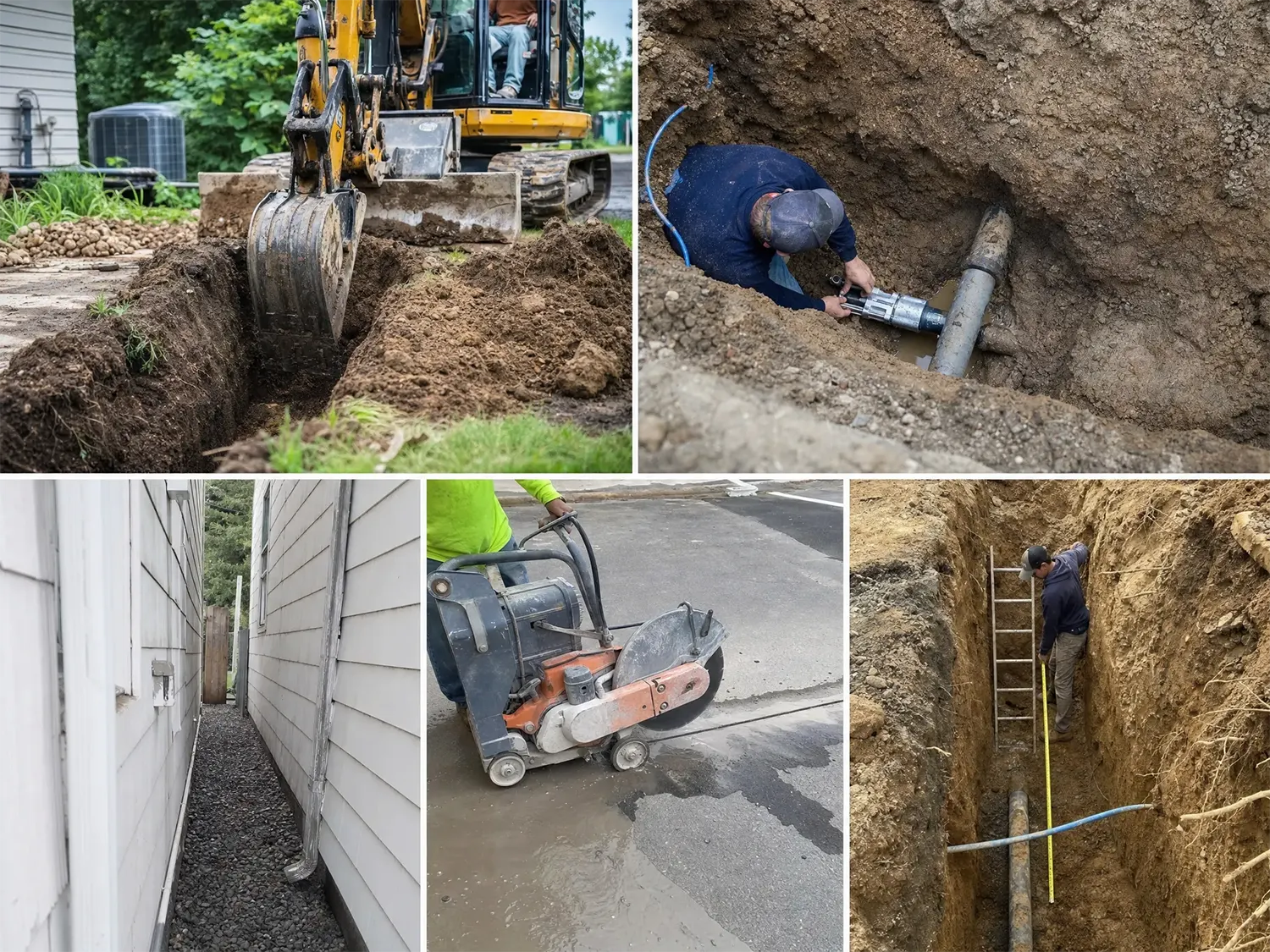
Water line repair costs vary significantly depending on what’s wrong, how accessible the line is, and whether a targeted repair or full replacement is the right solution. Research on estimating pipeline renovation costs confirms that depth, material, and soil conditions are the primary cost drivers. Here’s a practical breakdown of what Jamestown homeowners can expect.
| Service Type | Typical Cost Range | Notes |
|---|---|---|
| Minor spot repair (valve, small section) | $500 – $1,500 | Best for newer lines with isolated damage |
| Trenchless pipe repair / pipe bursting | $1,500 – $4,000 | Less yard disruption, faster turnaround |
| Open-cut excavation repair | $2,000 – $5,000 | Required for extensive damage or deep lines |
| Full water line replacement | $3,500 – $7,500+ | Recommended for lines 50+ years old or multiple failures |
| Lead service line replacement (NYS requirement) | $4,000 – $10,000 | May be required under NYS regulations |
Important: These ranges reflect typical Jamestown/Chautauqua County conditions. Final costs depend on line length (distance from the meter to your house), excavation depth, whether permits are required by the city, and yard restoration after the work.
What Factors Drive Repair Costs Up?
A few factors can push water line repair costs above the typical range in Jamestown:
- Deep burial — Lines buried more than 4 feet require more excavation time and equipment
- Driveway or concrete surface crossings — Cutting and restoring concrete adds $1,000–$3,000
- Lead line trigger — New York State regulations may require replacing any connected lead segments when a repair is made, even if those segments aren’t the source of the problem
- Permit requirements — Jamestown and Chautauqua County permits for water line work typically add $50–$300 to the total cost
- Yard restoration — Backfill, compaction, seeding, or landscaping repair after excavation can add $500–$2,000
⚠️ Common Mistake: Many Jamestown homeowners assume their standard homeowners insurance will cover a main water line repair. Most policies don’t — this type of failure is classified as wear and tear, not sudden damage. Check your policy for a service-line endorsement, or call your agent to ask about adding one. It typically costs $40–$100 per year and can cover thousands in future repairs.
Should You Repair or Replace Your Water Line?
This is the most important decision you’ll make after discovering a water line problem. Getting it right means spending your money wisely — not just fixing today’s symptom while ignoring a pipe that will fail again in two years.
When Is a Repair Enough?
A targeted repair is typically the right choice when:
- The line is less than 25 years old and the material is in good condition overall
- The failure is isolated — a single point of damage rather than widespread corrosion or multiple cracks
- The pipe is not galvanized steel or lead (both materials tend to fail at multiple points once corrosion advances)
- This is the first repair call — not the second or third in recent years
When Does Full Replacement Make More Sense?
Replacement is typically the smarter financial decision when:
- The line is 50+ years old — particularly if it’s original to a Jamestown home built before 1975
- The pipe material is galvanized steel or lead — both corrode throughout the entire line and will fail at multiple points over time
- You’ve had repair calls within the last 3–5 years — repeated failures signal systemic pipe degradation
- NYS regulations require lead segment replacement as part of any repair — in that case, full replacement can be more economical than piecemeal work
- Neighbors in homes of the same era are already replacing their lines
Where to Invest vs. Where to Save
If you’re trying to manage the cost of a water line project, here’s where to put your money and where you can reasonably trim:
💎 Worth Investing In
- Licensed, insured contractor familiar with Jamestown’s i