

If a camera found a crack in your sewer pipe, you have four repair options, and the right one depends on how much of the pipe is still sound. A cracked pipe rarely fixes itself, and waiting usually lets the crack open the door to roots, leaks, and a backup. This guide covers what causes cracks in Western New York, what each repair option involves, what McCandless Plumbing & Excavation says each costs, and what can happen if you put it off.
The short version: Spot repair fits damage in one section. CIPP lining and pipe bursting are trenchless options when the pipe still qualifies. Traditional excavation is for collapsed or misaligned lines. McCandless says a full Jamestown replacement usually costs $3,500 to $12,000, and every job is quoted in writing after a camera inspection.
What Causes Sewer Pipes to Crack in Western NY?
Sewer pipes crack for a few common reasons, and in Western New York they often work together. EPA’s guidance on sanitary sewage says age and pipe material matter, and that ground shifts and roots also contribute. McCandless adds the local factor: Chautauqua County’s freeze-thaw winters.
| Cause | How It Cracks the Pipe | What to Watch For |
| Age and material | Old joints and walls deteriorate; EPA says clay is more susceptible to cracking than concrete or plastic | Homes with original clay, cast iron, or Orangeburg lines from the 1940s to 1960s |
| Ground shifting | When the ground moves, sewer lines crack or misalign and joints open (EPA) | Settling after construction, heavy equipment driving over the line, or soil that moves after a thaw |
| Freeze-thaw | McCandless says repeated winter cycles crack aging joints a little more each year | New slow drains or odors after winter |
| Tree roots | Roots enter through small cracks and joints, then damage the pipe’s structure (EPA) | Repeat clogs, gurgling, or lush patches in the lawn |
One cause often leads to another. A small crack lets roots in, the roots widen the crack, and freeze-thaw movement opens it further. That is why a camera inspection matters more than the age of the house.
How Do You Know a Sewer Pipe Is Cracked?
Sometimes you don’t. Pinellas County’s private sewer lateral FAQ notes that a leaking lateral can go for years without causing plumbing problems, because it is underground and out of sight. When there are signs, McCandless lists these:
- Several drains backing up at the same time
- Slow drainage throughout the house, even after cleaning
- Sewage odors from drains or the yard
- Wet or soggy spots along the sewer’s path in the yard
- A sudden, unexplained jump in your water bill
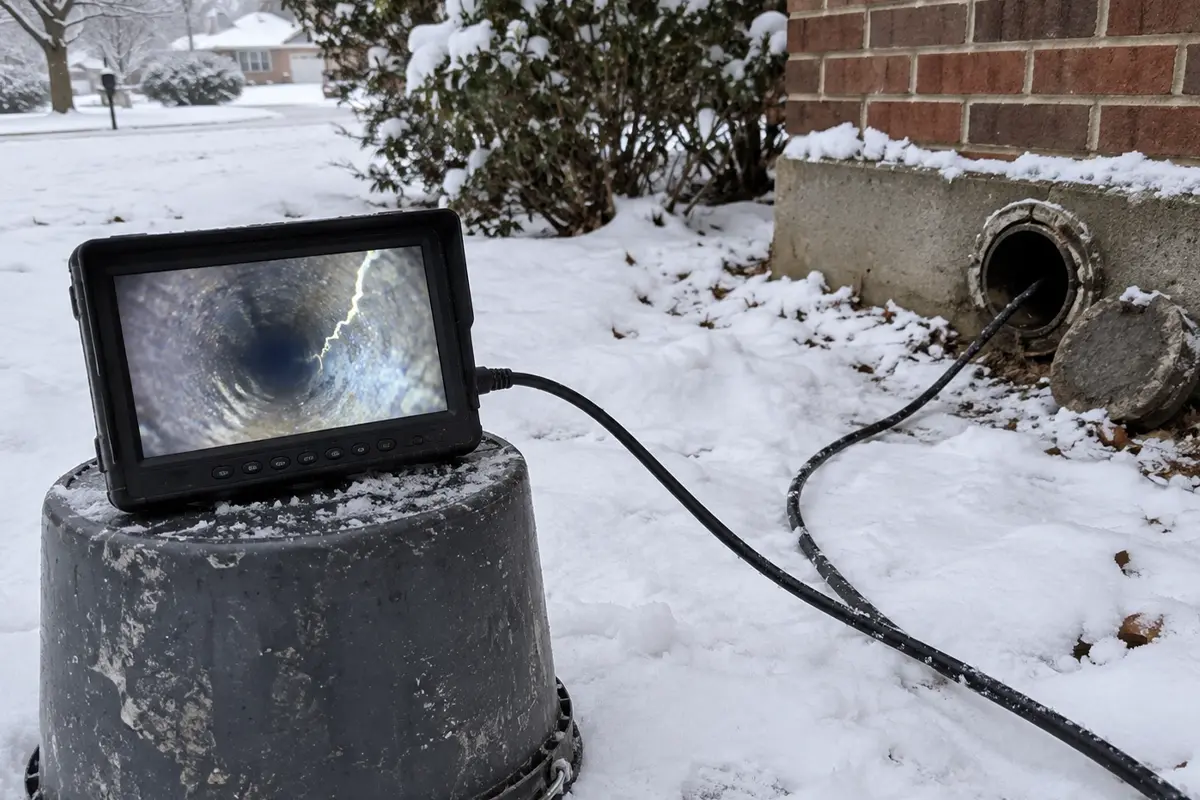
The only way to confirm a crack is a sewer camera inspection. It shows where the crack is, how bad it is, and whether the pipe around it is sound. For how the camera works, see McCandless’s guides to sewer camera inspection in Jamestown and CCTV sewer inspection in Western NY. Minor blockages sometimes turn out to need only drain cleaning, which is why the camera comes first.
Your Repair Options for a Cracked Sewer Pipe
McCandless’s sewer line replacement and repair service offers all four options below. It uses trenchless methods where conditions allow and its own excavation crew when they don’t.
| Option | How It Works | When It Fits | Watch Out For |
|---|---|---|---|
| Spot repair | The damaged section is dug up and replaced | Damage is confined to one section, and the rest of the pipe is sound | An old pipe can fail in other places later, so McCandless points to replacement for a line over 50 years old with multiple problem areas |
| CIPP lining | A new pipe is formed inside the old one through small access points | Minor to moderate damage in a pipe that is still aligned | Needs a sound pipe to line; collapsed or shifted sections are replacement territory |
| Pipe bursting |