

| QUICK ANSWER
In New York, there’s no statewide law forcing you to repair a septic system before selling — but in practice, most buyers, home inspectors, and mortgage lenders will flag a failing system, so you’ll usually either repair it, offer the buyer a credit, or sell the home as-is. In rural Chautauqua County, where a large share of homes run on private septic, a clean septic system inspection is often what keeps a deal on track. |
| WHAT THIS GUIDE COVERS
01 Is a septic inspection required to sell in NY? 02 What happens if the system fails inspection? 03 How much does repair or replacement cost? 04 Can you sell a house as-is with a bad septic? 05 Septic or city sewer — which does your home have? 06 When should you inspect before listing? |
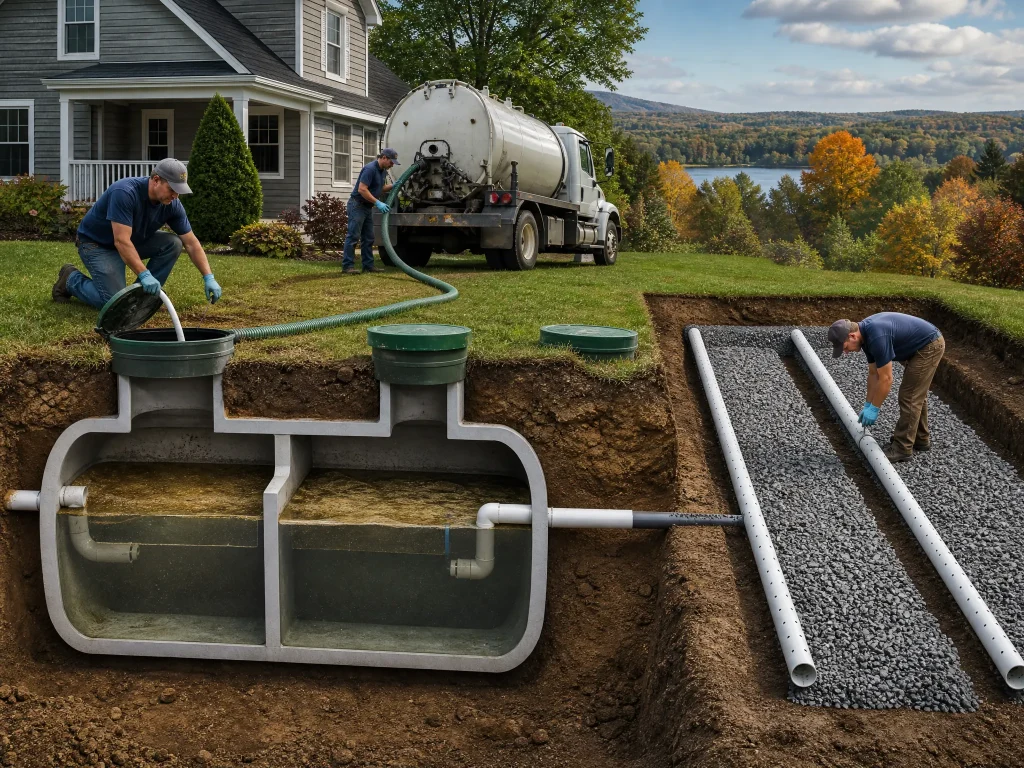
If you’re preparing to sell a home around Jamestown, Dunkirk, Fredonia, or anywhere in Chautauqua County, the septic system is one of the first things a serious buyer will ask about. Western New York has some of the oldest housing stock in the state — many homes here were built 60 to 100+ years ago — and outside city limits, most of them treat wastewater with a private septic system rather than a municipal sewer. That makes the condition of your tank and drain field a real factor in how smoothly your sale goes. Here’s what actually matters.
01 Is a septic inspection required to sell a house in New York?
New York doesn’t have a single statewide law that forces a septic inspection every time a home changes hands. In reality, though, an inspection is close to unavoidable for most sales. Mortgage lenders — especially on FHA and VA loans — typically require proof that the system functions before they’ll fund the loan, and nearly every buyer’s home inspector will evaluate the septic as part of due diligence. Some counties and towns also have their own point-of-sale requirements.
The practical takeaway: even where it isn’t legally mandatory, a professional septic inspection is a standard part of a Chautauqua County home sale. Going in with a recent, passing inspection removes one of the biggest sources of last-minute deal friction.
02 What happens if your septic system fails inspection?
A failed inspection rarely kills a sale on its own — but it does hand negotiating leverage to the buyer. Once a problem is on paper, you generally have three paths forward: repair the system before closing, offer the buyer a credit or price reduction so they can handle it, or sell the home as-is (more on that below).
Common reasons a septic system fails
- A saturated or failing drain field (soggy ground, odors, slow drains)
- A cracked, corroded, or collapsed tank
- Chronic backups into the home or standing effluent on the surface
- Tree-root intrusion or crushed distribution lines
- A tank that was never pumped and is overdue by years
Many of these are fixable without a full replacement. A cracked baffle, a failed pump, or a clogged line often falls under straightforward septic tank repair and maintenance rather than a total rebuild — which is why an accurate diagnosis matters before you assume the worst.
03 How much does it cost to repair or replace a septic system in NY?
Costs vary widely with soil type, system size, permit requirements, and how easy the tank and field are to reach with equipment. As general planning estimates:
- Septic inspection: roughly $300–$650
- Tank pumping: roughly $300–$600
- Minor repairs (baffles, pumps, small line fixes): a few hundred up to about $1,500
- Drain field repair or replacement: roughly $3,000–$15,000
- Full system replacement: roughly $7,000–$25,000+
A full replacement is essentially an excavation project as much as a plumbing one — it involves digging, grading, permitting, and precise placement to meet county rules, which is where experienced excavation services and proper septic tank installation pay off. Treat the figures above as ballparks; the only number that counts is a written quote for your specific property.
Your three options when a septic system fails before a sale
| Option | What it means | Best when… |
|---|---|---|
| Repair before closing | You fix the system so it passes and the sale proceeds at full value. | The problem is contained and you have time before closing. |
| Credit the buyer | You lower the price or give a closing credit so the buyer handles repairs. | The buyer wants to choose their own contractor or scope. |
| Sell as-is | You disclose the issue and sell without repairing, often to a cash buyer. | Repair cost or timeline doesn’t make sense for your situation. |
Figure: Comparing repair, credit, and as-is sale for a failing septic system in New York.
04 Can you sell a house as-is with a failing septic system?
Yes. You’re allowed to sell a home as-is with a failing septic system, provided you disclose known defects — New York requires sellers to complete a property condition disclosure covering material issues like septic problems, so hiding a known failure isn’t an option. The trade-off is that many traditional, mortgage-financed buyers will either walk away or submit a much lower offer once they see the inspection.
That’s why some owners in this situation sell directly to a cash home buyer that purchases properties in any condition. Market activity and buyer demand can also influence the selling process, according to HouseCashin’s New York data. While selling as-is may result in a lower purchase price, it can help homeowners avoid investing additional time and money into major repairs before closing. It’s important to weigh that trade-off against the potential return from repairing the property before selling.
05 Septic or city sewer — which does your home have?
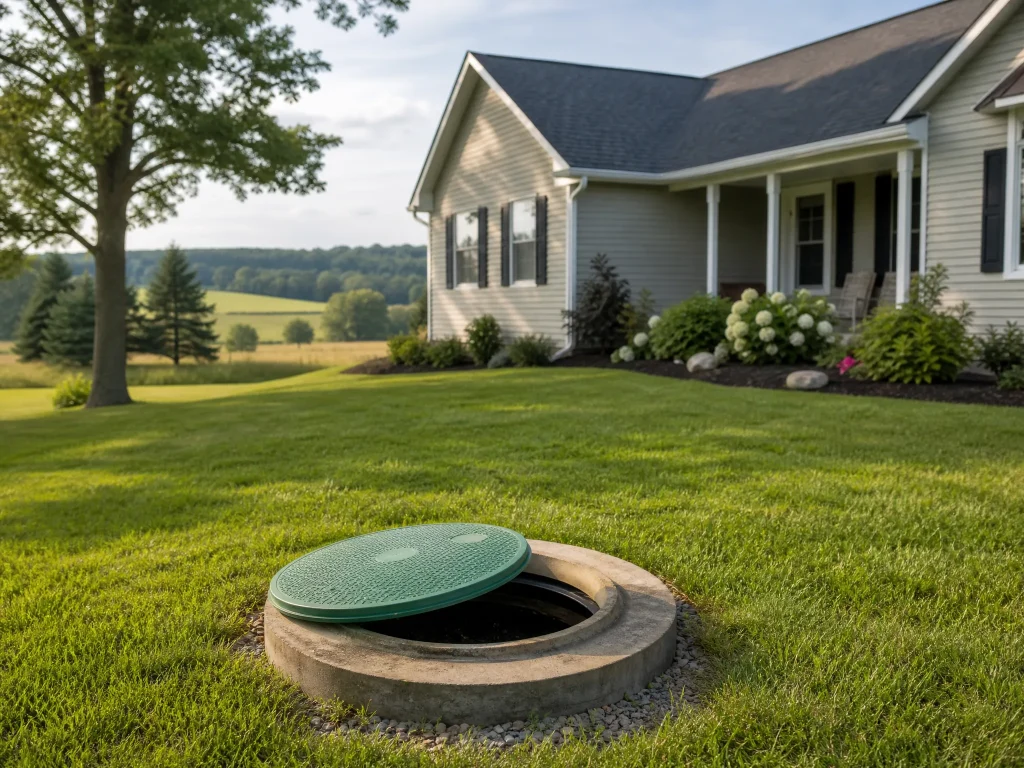
Not every Chautauqua County home is on septic. Properties inside Jamestown, Dunkirk, and Fredonia city limits are usually tied into a municipal sewer, while rural and lakeside properties typically rely on a private septic system. This matters because the pre-sale check is different: a municipal home may need a sewer camera inspection to confirm the lateral line is intact, and issues at the street can involve the main sewer line connection rather than a tank and field.
If you’re not sure which system your home uses, a camera inspection is the fastest way to find out and document the line’s condition before you list.
06 When should you inspect your septic before listing?
Inspect two to three months before you list. That window gives you room to pump the tank, make targeted repairs, or plan a replacement without a pending closing date breathing down your neck — and it lets you market the home with a clean, recent inspection already in hand. Routine care between sales matters too: the U.S. EPA’s septic care and maintenance guidance recommends a professional inspection roughly every three years and pumping every three to five years, which is exactly the maintenance history buyers and their inspectors like to see.
| Selling soon? Start with a septic inspection.
McCandless has inspected, repaired, and installed septic systems across Chautauqua County since 1975. Get a clear diagnosis before you list — no after-hours surcharges, and honest options either way. Call (716) 403-2478 or request a quote online · Serving Jamestown, Dunkirk, Fredonia & all of Chautauqua County |
Conclusion
- No statewide NY law forces a septic repair before selling — but lenders and inspections make one all but unavoidable.
- A failed inspection gives you three moves: repair before closing, credit the buyer, or sell as-is.
- Repairs range from a few hundred dollars up to $25,000+ for a full replacement; get a property-specific quote.
- You can sell as-is with disclosure — cash buyers purchase homes with failing septic in any condition.
- Most rural Chautauqua County homes are septic; inspect 2–3 months before listing and keep maintenance current.
Explore all septic system services from McCandless Plumbing & Excavation.
| Reviewed by the McCandless Plumbing & Excavation team. Family-owned and led by Alex McCandless, McCandless has served Jamestown and Chautauqua County since 1975. The company is fully licensed, insured, and bonded in New York State and holds a 5.0-star Google rating.
This article is educational and reflects general practice in New York; it is not legal or financial advice. Confirm current disclosure requirements and loan conditions with your real estate agent or attorney. |
RELATED QUESTIONS
How does a septic inspection work?
What does a sewer camera inspection show?
Can a failing drain field be repaired without replacing the whole system?