

If you live in Chautauqua County and suspect your septic system is failing, don’t wait. Septic problems can escalate quickly, leading to costly repairs or even a full system replacement that can exceed $15,000. This article is designed to help you recognize urgent warning signs, understand why they happen, and know exactly what steps to take before a small issue becomes a major emergency.
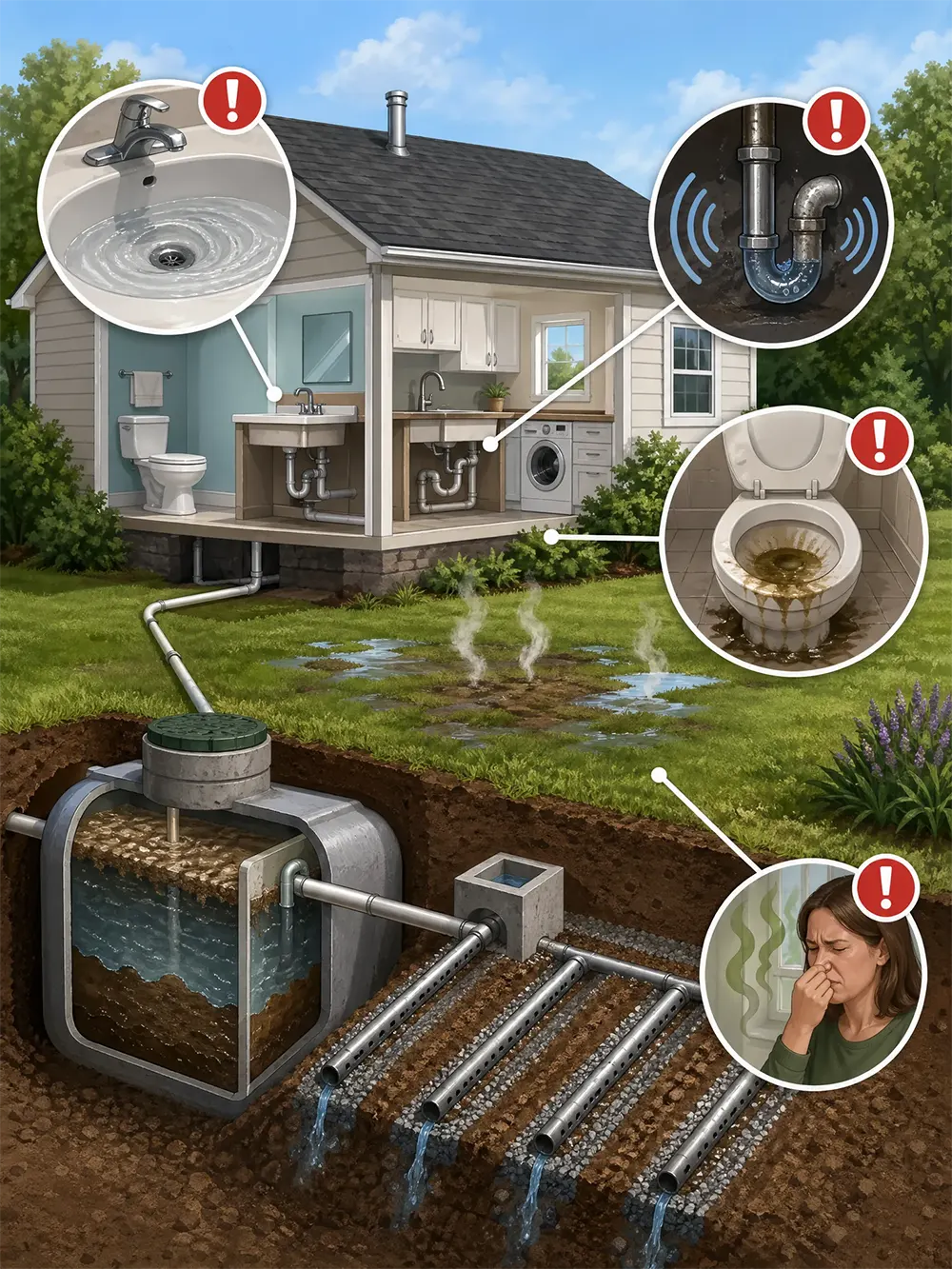
6 Critical Warning Signs Your Septic System Needs Immediate Attention
Septic systems work quietly beneath your property, but when they start to fail, they send clear signals. Here are the most common and urgent signs to watch for, along with what you can do as temporary or immediate measures for your failing septic system.
Slow Drains
When sinks, tubs, or showers drain slowly, it often means wastewater is not flowing properly through your septic system. This can be caused by blockages in pipes or sludge buildup in the tank.
What to do:Limit water use and schedule a professional drain cleaning or inspectionimmediately to prevent backups.
Gurgling Toilets or Drains
Gurgling sounds indicate air trapped in the plumbing, often caused by a clogged or failing septic system. This can signal that wastewater is backing up or that venting is compromised.
What to do:Avoid flushing non-degradable items and call a septic service to diagnose the problem.
Sewage Smells Outside
Foul odors near your septic tank or drain field mean sewage is escaping or not being properly treated. This is a serious health hazard and a sign of system failure.
What to do:Avoid the area and contact a licensed septic professional immediately for septic system inspection and repair.
Wet, Soggy Yard Over the Drain Field
If you notice unusually wet or muddy patches in your yard, especially over the drain field, it suggests the system is leaking or saturated and cannot absorb wastewater properly.
What to do:Keep off the wet area to avoid damage and schedule a septic inspectionas soon as possible.
Unusually Green or Lush Grass Over Septic Area
Greener grass over the drain field can indicate excess nutrients from leaking sewage. While it might look healthy, it signals a failing system.
What to do:Avoid disturbing the area and arrange for a professional evaluation.
Sewage Backup Inside the Home
Raw sewage backing up into toilets, sinks, or floor drains is an emergency. It means your septic system is overwhelmed or blocked.
What to do:Stop using water immediately, avoid contact with sewage, and call a licensed septic service without delay.
Septic System Inspection Methods
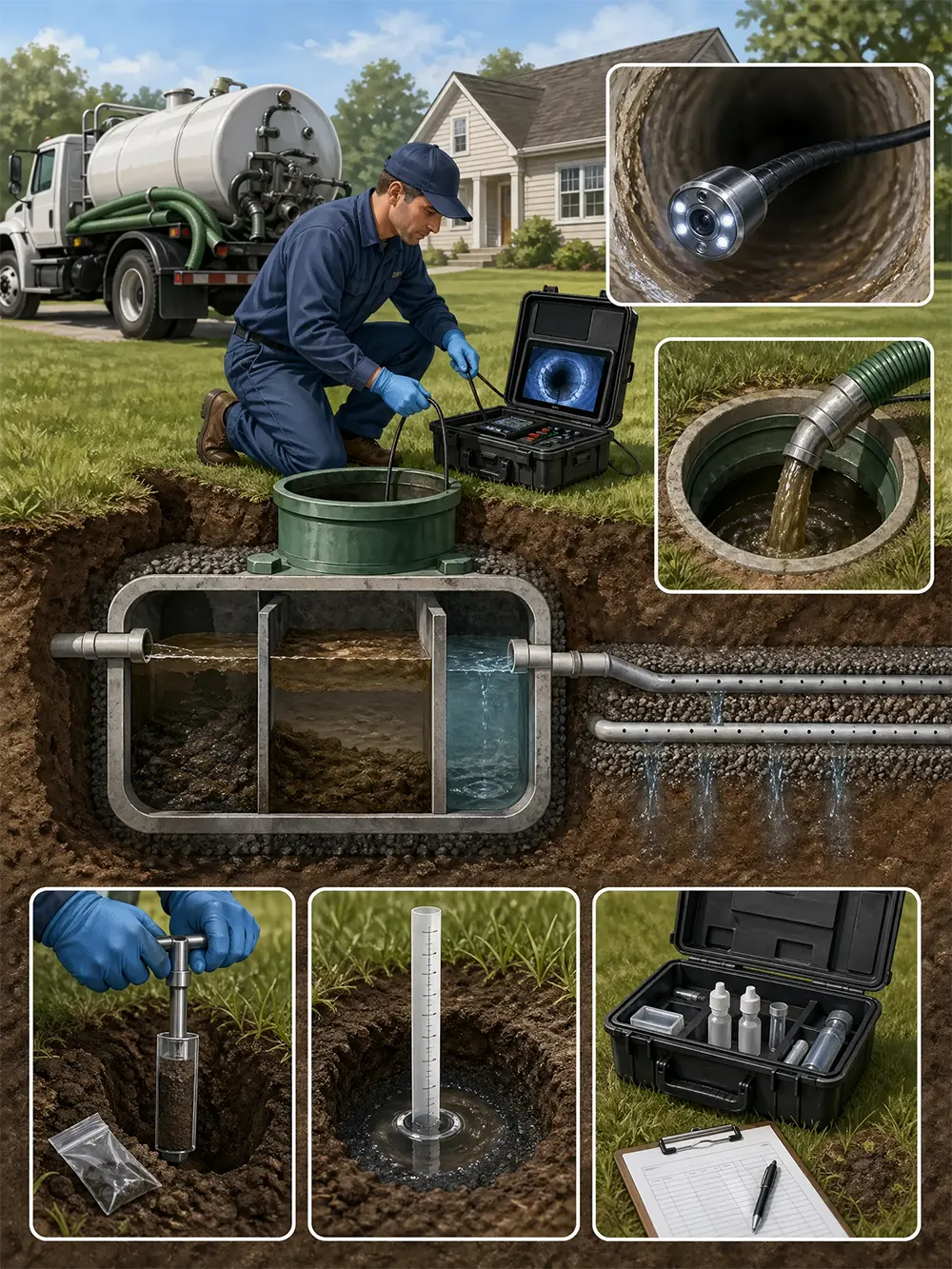
If you notice any of the warning signs above, the next step is a professional inspection. Licensed septic technicians use several methods to assess the condition of your system, identify the root cause of the problem, and determine the right course of action. Here is what to expect during a septic inspection in Chautauqua County.
Visual Surface Inspection
The inspector walks the property to look for visible signs of failure: wet or odorous ground over the drain field, unusually lush vegetation, tank lid condition, and any surface ponding. This is usually the first step before any equipment is used and helps the technician prioritize what to examine more closely.
Tank Pumping and Physical Inspection
Once the tank is pumped, the technician inspects its interior for cracks, corrosion, damaged baffles, and excessive sludge or scum buildup. The inlet and outlet pipes are checked for blockages or deterioration. This method gives a direct look at the tank’s structural integrity and is often combined with drain field evaluation to form a complete picture of system health.
Sewer Camera Inspection
A sewer camera inspectioninvolves feeding a small waterproof camera through the sewer line from your home to the tank. It reveals blockages, root intrusion, pipe cracks, bellied sections, and other line defects that would otherwise require excavation to find. For Chautauqua County homeowners dealing with recurring slow drains or gurgling toilets, a camera inspection is one of the most efficient and cost-effective diagnostic tools available.
Drain Field Load Test
During a drain field load test, the technician runs water into the system while monitoring how quickly it absorbs into the soil. Slow absorption or pooling indicates that the drain field is saturated or has failed. This test is especially relevant in Chautauqua County, where soil composition and seasonal groundwater levels can significantly affect drain field performance.
Dye Testing
A non-toxic colored dye is flushed through the plumbing system so the inspector can trace the flow of wastewater and detect leaks or surface breakouts. If the dye appears on the ground above the drain field or near the tank, it confirms that effluent is surfacing where it should not be. Dye testing is a straightforward method used to confirm suspected failures before more invasive work is done.
Not every situation calls for every method. A licensed technician will recommend the appropriate combination based on what symptoms are present. If you’re already noticing warning signs, don’t wait for the problem to worsen — early inspection is always less expensive than emergency repair.
Why These Problems Occur
Septic system failures often stem from sludge buildup, clogged pipes, damaged components, or drain field saturation. In Chautauqua County, factors like soil type, weather conditions, and property drainage can influence how quickly problems develop. Ignoring early signs allows damage to worsen, increasing repair costs and health risks.
What Chautauqua County Homeowners Can Do as Preventive Measures

If you notice any of these warning signs, take action immediately. Early intervention can save thousands of dollars and prevent environmental contamination. Here’s a clear escalation path:
- Limit Water Use: Reduce water consumption to ease stress on your septic system.
- Inspect and Diagnose: Contact McCandless, a trusted local septic service provider in Chautauqua County, for a thorough inspection and diagnosis.
- Schedule Maintenance or Repairs: Follow professional recommendations for pumping, repairs, or system upgrades.
- Prevent Future Issues: Adopt water conservation habits, schedule regular inspections every 1–3 years, and pump your tank every 3–5 years based on usage.
Waiting too long can turn a manageable repair into a $15,000+ emergency replacement. McCandless offers expert plumbing, excavation, and septic servicestailored to Chautauqua County’s unique needs, ensuring your system stays healthy and your home safe.
Frequently Asked Questions About Septic System Failure
What are the warning signs your septic system is failing?
The 6 main warning signs are: slow drains, gurgling toilets or drains, sewage smells outside, a wet or soggy yard over the drain field, unusually green or lush grass over the septic area, and sewage backup inside the home.
What should I do if my septic system is failing?
Immediately limit water use, avoid the affected area, and contact a licensed septic service provider for inspection and diagnosis. Early intervention can save thousands of dollars and prevent environmental contamination.
How much does septic system repair cost in Chautauqua County?
Ignoring early signs can lead to a full system replacement that can exceed $15,000. Early diagnosis and repair through a licensed local provider like McCandless can prevent these costs.
How often should I have my septic system inspected?
Septic systems should be inspected every 1 to 3 years and pumped every 3 to 5 years based on household usage. Regular maintenance prevents costly failures.
Why does my yard smell like sewage near the septic tank?
Sewage odors outside near your septic tank or drain field indicate that sewage is escaping or not being properly treated. This is a serious health hazard and a sign of system failure requiring immediate professional attention.
Why is the grass greener over my septic drain field?
Unusually green or lush grass over the septic drain field can indicate excess nutrients from leaking sewage. While it may look healthy, it signals a failing system that needs professional evaluation.
How do I know if my septic system is failing or just needs to be pumped?
If symptoms like slow drains or backups clear up after pumping, the tank was likely just overdue. If odors, wet ground, or surfacing sewage persist after a pump-out, the issue runs deeper — a professional inspection will identify whether it’s the drain field, pipes, or tank components.
Can a failing septic system be repaired, or does it need to be fully replaced?
Many problems — cracked baffles, broken pipes, clogged distribution boxes — can be repaired without full replacement. Full replacement is typically only necessary when the tank has structurally failed or the drain field is completely unrecoverable, which is why catching issues early matters so much.
Is a failing septic system a health hazard?
Yes. Failing septic systems expose your household to harmful bacteria, viruses, and pathogens, and can contaminate groundwater, nearby wells, and local waterways. Keep children and pets away from any affected area and call a licensed professional immediately.
How long does a septic system last in Chautauqua County?
Tanks typically last 20 to 40 years; drain fields 25 to 30, though clay-heavy soils and high groundwater — common in parts of Chautauqua County — can shorten that. Regular pumping every 3 to 5 years and inspections every 1 to 3 years are the most effective ways to extend your system’s lifespan.
What should I avoid doing if I think my septic system is failing?
Reduce water use immediately — avoid back-to-back laundry loads, long showers, and running the dishwasher. Don’t drive over the drain field, and keep grease and harsh chemicals out of the drains. Most importantly, call a professional without delay.
Does homeowners insurance cover septic system failure?
Most standard policies do not cover failure from wear, age, or neglected maintenance. Coverage may apply for sudden, accidental damage depending on your policy so check with your provider. Either way, a prompt inspection limits further damage and provides documentation if a claim applies.
Contact McCandless Plumbing & Excavation for Septic System Repair
Septic system problems are stressful, but recognizing the warning signs early and acting quickly can protect your home, health, and wallet. If you live in Chautauqua County and notice slow drains, gurgling toilets, sewage odors, wet or lush yard spots, or sewage backups, don’t delay. Contact McCandless Plumbing & Excavation today to schedule an inspection and keep your septic system running smoothly before a small issue becomes a costly emergency.