

Quick answer: If you’re a homeowner in Chautauqua County weighing the choice between connecting to a municipal sewer or installing and maintaining a septic system, you’re facing a decision with significant implications. In brief, septic systems generally have lower upfront costs but require ongoing maintenance and responsibilities. Municipal sewer connections tend to have higher initial fees and monthly charges but reduce homeowner upkeep. Environmental impacts vary based on system performance and location, while property value effects depend on local preferences and infrastructure availability. Importantly, many properties in Chautauqua County are too far from municipal sewer lines to make connection practical, influencing the decision considerably.
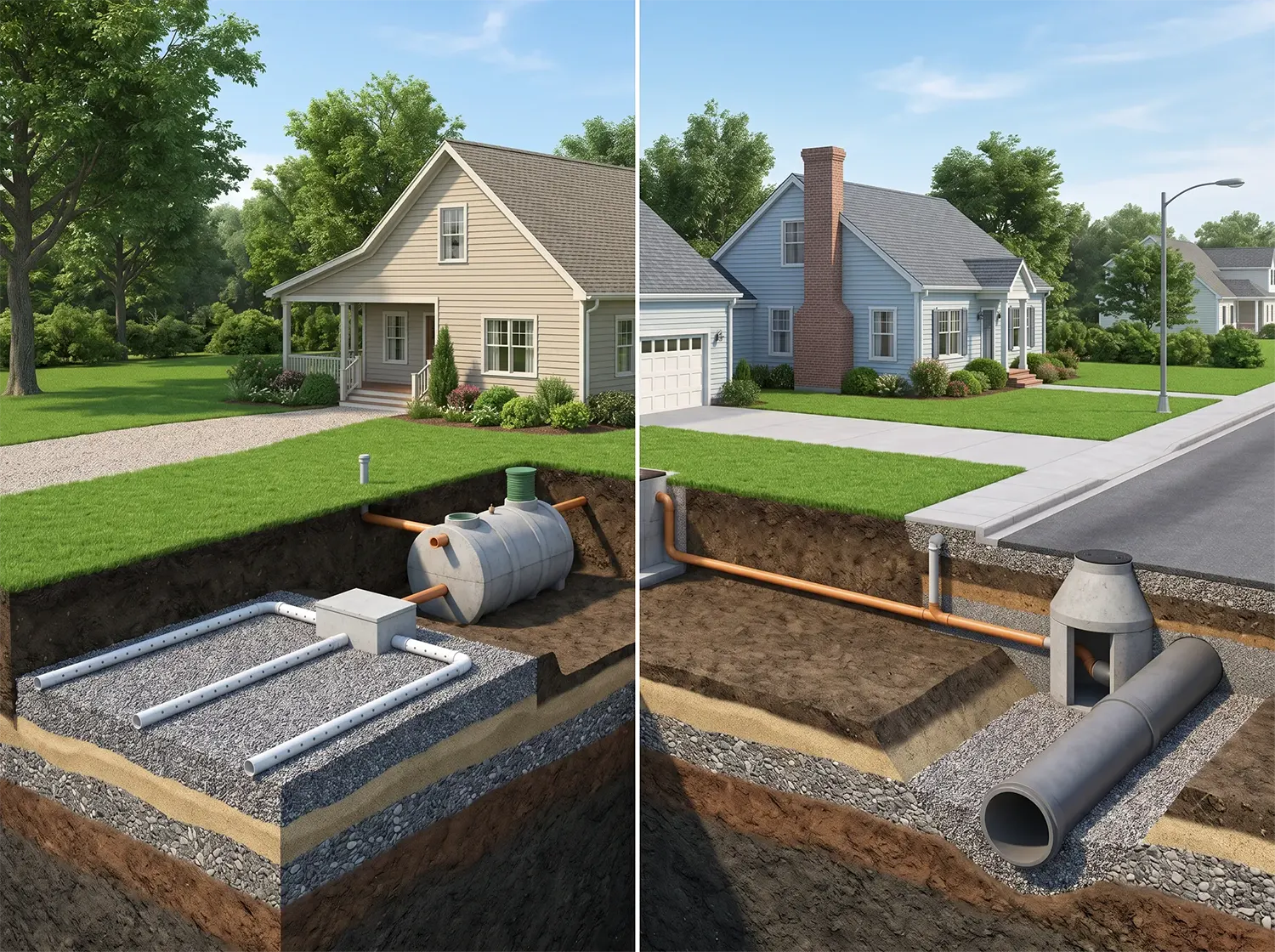
This article compares these systems by covering installation and connection costs, ongoing expenses, maintenance duties, environmental considerations, property value impacts, and what determines eligibility to connect to municipal services. Our goal is to provide a balanced, informative overview tailored to Chautauqua County homeowners so you can choose the wastewater option that fits your property and lifestyle. As local experts, we at McCandless Plumbing & Excavation are here to assist you with septic installation and maintenance, ensuring your system meets county standards and operates efficiently.
Key Takeaways
- Septic systems treat household wastewater on your property using natural processes and require regular upkeep in Chautauqua County.
- Main septic components include the septic tank, drain field, and inspection ports, which together manage wastewater effectively.
- Installing a septic system typically involves a site assessment, a compliant design, excavation, installation, and a final inspection.
- Routine septic care consists of annual inspections and tank pump-outs every 3 to 5 years, often costing $300 to $500.
- Municipal sewer systems route wastewater to centralized treatment plants, offering convenience and consistent environmental protection.
- Connecting to municipal sewers requires submitting an application, getting a cost estimate, and hiring qualified contractors for installation in Chautauqua County.
- While municipal connections reduce homeowner maintenance, they can include connection fees and ongoing monthly charges.
- Septic and municipal systems affect the environment and property values in different ways, which can influence homeowner decisions.
- Local regulations and any available incentives in Chautauqua County play a key role in which wastewater option makes the most sense.
What Is a Septic System and How Does It Work in Chautauqua County?
A septic system is an underground system that treats household wastewater where it’s produced. It relies on physical separation and natural microbial processes to break down solids and produce treated liquid (effluent). In Chautauqua County, these systems must meet health and safety standards designed to protect groundwater and public health. Treated effluent is either absorbed into a drain field or undergoes additional on-site treatment, depending on the design. McCandless Plumbing & Excavation provides comprehensive septic system services in Chautauqua County to help homeowners stay compliant and avoid costly problems.
Knowing how a septic system functions helps homeowners understand both its advantages and the responsibilities that come with it. Performance depends on proper design, regular maintenance, and how residents use water and household products.
What Are the Key Components and Installation Steps of a Septic System?
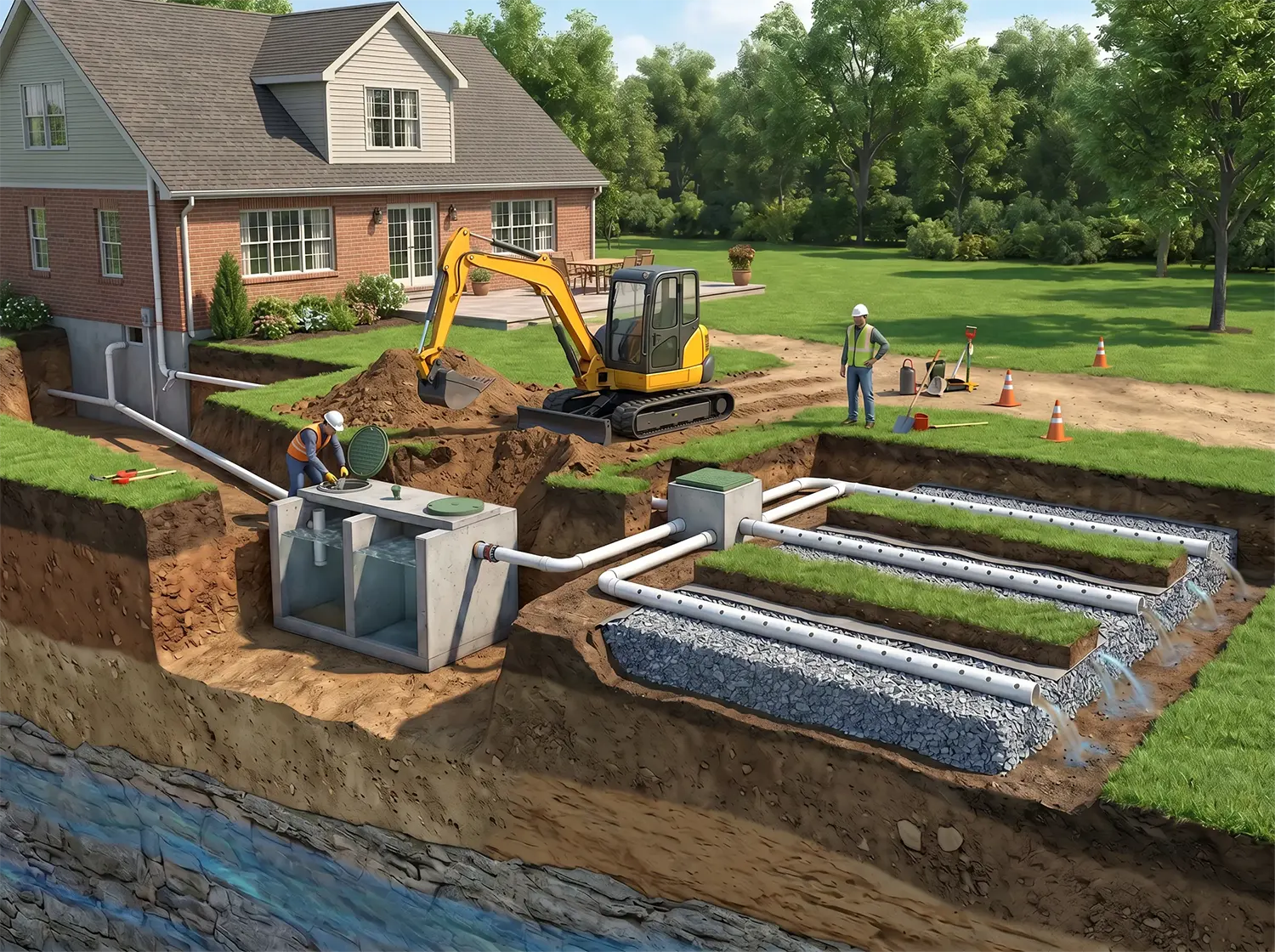
Installing a septic system includes a few essential components and carefully sequenced steps to ensure long-term function and regulatory compliance. Key components include:
- Septic Tank: An airtight tank that separates solids from liquids and stores sludge until it’s pumped out.
- Drain Field: Pipes and soil that filter and disperse the effluent safely into the ground.
- Inspection Ports: Access points for checking sludge levels and performing maintenance.
The standard installation process usually follows these steps:
- Site Assessment: Evaluate soil conditions and identify the best drain field location.
- Design Plan: Produce a system design that complies with county regulations.
- Excavation: Prepare the site by digging the tank and drain field areas. Our excavation services ensure site preparation meets county code before installation begins.
- System Installation: Place the tank, connect piping, and install the drain field.
- Final Inspection: Have the system inspected and approved to meet local codes.
A properly installed system protects health, the environment, and your property investment under Chautauqua County rules. Learn more about our professional septic tank installation in Chautauqua County.
What Are Typical Maintenance Tasks and Costs for Septic Systems?
Regular maintenance keeps a septic system working well and avoids costly failures. Common tasks include:
- Routine Inspections: Annual checks to spot issues early and verify system performance. Schedule professional septic system inspections in Chautauqua County to catch problems before they escalate.
- Pump-Outs: Tanks generally need septic tank pumping every 3 to 5 years; expect costs of $300 – $500 to prevent backups and extend system life.
- Repairs: Depending on the issue, septic tank repairs can range from $500 to $1,500.
Skipping maintenance raises the risk of system failure, property damage, and environmental contamination. Learn to recognize the signs of a failing septic system in Chautauqua County so you can act before small problems become major repairs. Regular care protects your home and local water resources.
Service Estimates and Scheduling
Plan regular inspections and pump-outs with reputable local professionals to avoid emergency repairs. A sewer camera inspection can also reveal hidden line issues before they cause backups or failures. Scheduling ahead ensures timely maintenance and keeps your system compliant with county requirements.
How Does the Municipal Sewer System Operate and What Are Its Benefits?
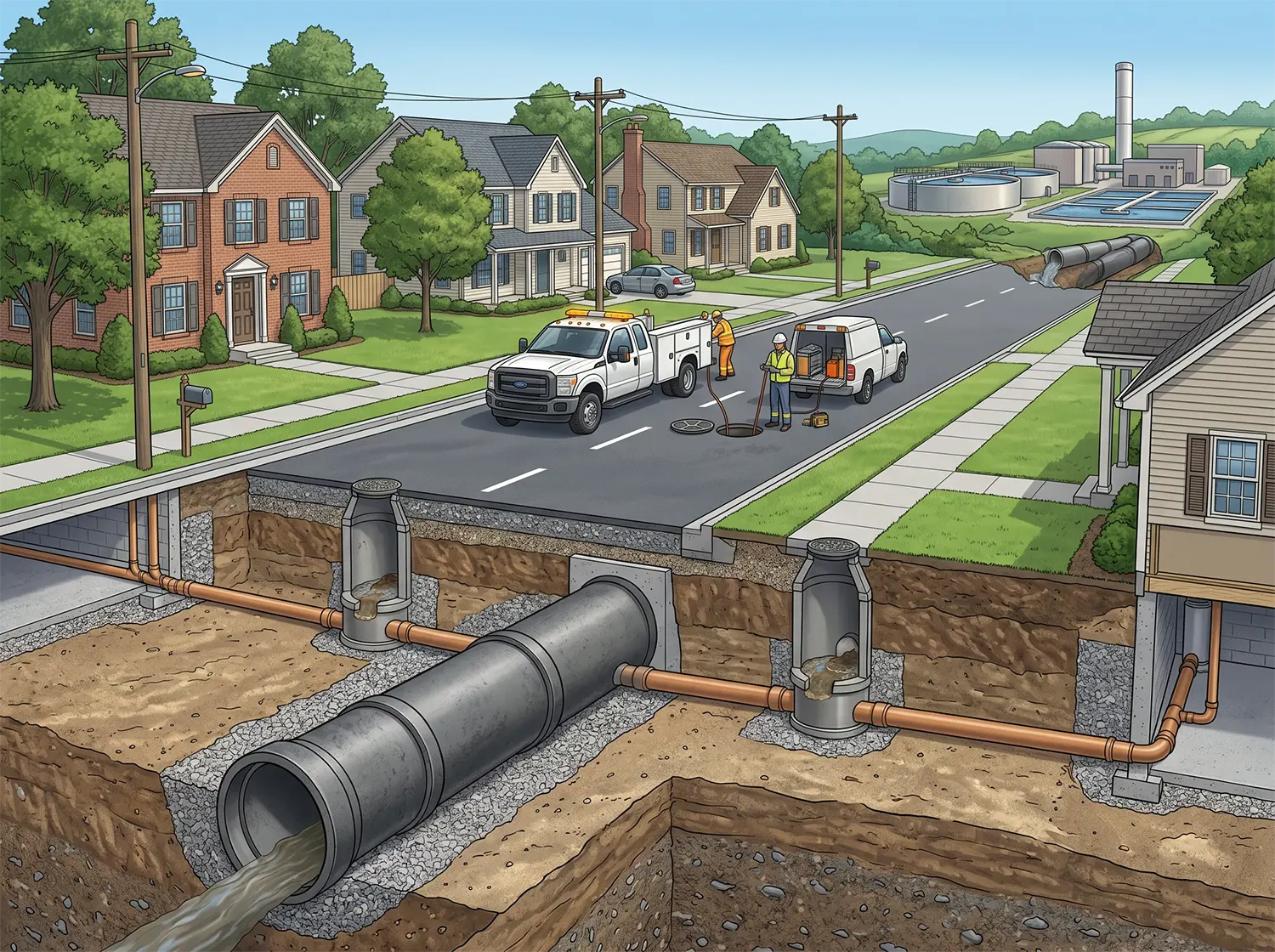
Municipal sewer systems collect wastewater from many homes and send it through a network of pipes to a treatment plant. There, the water goes through multiple treatment stages to remove contaminants before being released back into local waterways.
Major benefits of municipal sewers include:
- Convenience: Homeowners are relieved of most maintenance duties.
- Capacity: Systems are built to handle large wastewater volumes consistently.
- Environmental Protection: Central treatment reduces pollutants and protects water quality.
Although infrastructure and connection costs can be higher, municipal systems offer a dependable long-term solution for wastewater management.
What Is the Connection Process to Chautauqua County Municipal Sewer?
To connect to a municipal sewer you typically follow a simple process. The Chautauqua County Sewer Agency oversees sewer connections in the region and can confirm whether your property is within reach of municipal infrastructure:
- Application: Submit a request to your local sewer authority to connect. McCandless Plumbing can assist with your main sewer line connection from application through final inspection.
- Cost Estimate: Get a quote that accounts for distance to the main line and other factors.
- Installation: Licensed contractors perform the physical connection and any required inspections.
Following these steps ensures your home is safely and correctly tied into the public system.
Relevant Excavation and Plumbing Services
When planning a sewer connection, hire professional plumbing and excavation services to meet county standards and avoid delays during permitting and installation.
What Are the Benefits and Costs Associated with Municipal Sewer Systems?
Municipal sewers bring several advantages that often appeal to homeowners:
- Lower Maintenance: Homeowners typically have minimal maintenance duties compared with septic systems.
- Consistency: Centralized treatment delivers predictable, regulated wastewater processing.
- Reduced Environmental Risk: Proper treatment lowers the chance of local water contamination.
Keep in mind there can be upfront connection fees and ongoing monthly service charges. Weigh these costs against the convenience and reliability municipal service provides.
Septic System vs. Municipal Sewer: What Are the Environmental and Property Value Impacts?
Both systems affect the environment differently. A well-maintained septic system can protect groundwater and function effectively on-site, while municipal systems can manage larger wastewater volumes and reduce pollution risk at a community level.
In terms of property value, homes tied into municipal sewer networks are often more attractive to buyers because they carry fewer maintenance responsibilities. Conversely, a properly maintained septic system can still support property value, particularly in rural areas where sewer access isn’t available.
What Local Regulations and Incentives Affect Wastewater Choices in Chautauqua County?
Chautauqua County enforces standards for septic installation and upkeep to protect public health. There may also be local incentives—such as reduced fees or grants—for homeowners who connect to municipal sewers or upgrade failing systems. Check with county officials for the latest programs and permit requirements that could influence your decision.
How Do Related Services Like Plumbing, Excavation, Drainage, and HVAC Integrate with Wastewater Systems?
Coordination among plumbing, excavation, drainage, and HVAC professionals helps ensure wastewater systems operate smoothly. Plumbers handle internal connections, excavators prepare sites, drainage work prevents surface water from compromising systems, and HVAC can help manage moisture in buildings near septic installations. A coordinated approach reduces problems and extends system life.
What Plumbing and Excavation Services Support Septic and Sewer Installations?
Key local services that support successful installations include:
- Soil Testing: Determines whether the site is suitable for a septic system and helps avoid installation failures.
- System Design and Installation: Licensed professionals design systems that meet local codes and install them correctly.
- Emergency Repairs: Prompt service prevents backups and protects your home from damage.
Working with local, licensed providers helps ensure compliance and dependable system performance.
How Does Drainage and HVAC Integration Enhance Wastewater System Efficiency?
Good drainage keeps excess surface water away from septic fields, protecting drain fields from saturation and failure. Proper yard drainage solutions prevent pooling and divert runoff before it can compromise your drain field. HVAC systems can help control humidity and prevent moisture-related issues in basements or utility areas. Together, these measures improve the reliability and lifespan of wastewater solutions.
What Are Common Questions About Septic vs. Municipal Sewer Systems in Chautauqua County?
Homeowners often ask:
- Which option is more cost-effective?
- What are long-term maintenance expectations?
- How do environmental impacts compare?
Answering these questions based on your property size, site conditions, and local rules will help you choose the best system.
How Can Property Owners Decide Between Septic and Municipal Sewer Options?
To decide, consider factors like:
- Cost of Installation: Compare upfront installation expenses with projected long-term costs.
- Maintenance Responsibilities: Decide whether you prefer hands-on upkeep or a service-backed municipal option.
- Health Risks and Environmental Impact: Evaluate how each option affects groundwater, nearby waterways, and neighborhood ecosystems.
Balancing these elements with your long-term plans and local regulations will guide the right choice for your property.
Frequently Asked Questions
1. What are the environmental considerations when choosing between septic systems and municipal sewers?
Environmental factors are central to this decision. A functioning septic system treats wastewater on-site and can protect groundwater when maintained properly; however, failing systems can leach contaminants. Municipal sewers collect and treat wastewater at centralized facilities, reducing local contamination risks but requiring extensive infrastructure. Review local ecological sensitivity and regulatory expectations to choose the system that best protects the environment.
2. What are the most common misconceptions about septic systems?
Common myths include the idea that septic systems are maintenance-free—true systems need regular inspections and pump-outs. Some people also assume permits aren’t necessary, which can lead to compliance issues. Finally, septic tanks won’t break down non-biodegradable items, so avoiding wipes, grease, and certain chemicals is important.
3. Can you convert from septic to municipal sewer, and what does that entail?
Yes. Converting usually starts with checking local regulations and obtaining permits. The process typically involves decommissioning the septic tank to county standards and installing the connection to the sewer main. Licensed contractors should handle assessments, design, and the physical work to ensure a compliant transition.
4. Are there incentives for transitioning from septic to municipal sewer systems?
Some municipalities offer incentives—like reduced connection fees, grants, or assistance programs—to encourage conversions or upgrades. Contact your local government or sanitation authority to find available programs that can offset conversion costs.
5. What impact do septic systems have on property values?
Wastewater systems can influence resale value. A well-maintained septic system can support property value, particularly where sewer access isn’t available. That said, many buyers prefer municipal sewer connections because they typically mean fewer maintenance responsibilities, which can make properties more marketable.
6. How can homeowners ensure their septic system is environmentally friendly?
Keep your system environmentally sound by scheduling routine inspections and pump-outs, avoiding flushing non-biodegradable or hazardous materials, and practicing water conservation. Using household products that are septic-safe and staying informed about local regulations also helps protect local water sources.
7. What are the long-term financial implications of septic versus municipal sewer systems?
Long-term costs differ: septic systems carry initial installation and periodic maintenance costs (like pump-outs every few years) but no monthly utility bills. Municipal connections may require higher initial fees and ongoing monthly charges but usually lower day-to-day maintenance responsibilities. Consider life-cycle costs and your tolerance for upkeep when comparing options.
Conclusion
Choosing between a septic system and municipal sewer in Chautauqua County affects your finances, property, and the environment. Learn the costs, upkeep needs, and local rules that apply to your property, and consult local experts to clarify options and next steps. With the right information and professional guidance, you can pick a wastewater solution that fits your needs and protects the community’s resources.
Need Expert Septic System Support in Chautauqua County?
At McCandless Plumbing & Excavation, we specialize in septic system installation, maintenance, and repairs tailored to meet local regulations and your property’s needs. Whether you’re installing a new system or ensuring your current one’s longevity, we’re here to help you protect your home and environment.