

Quick Answer: When comparing a French drain vs. a sump pump, which is better depends on where your water comes from. A French drain is a passive, gravity-fed trench with gravel and perforated pipe that intercepts water in the yard or around the foundation before it gets in. A sump pump is an electric pump in a basement pit that removes water once it collects below the floor. Yard flooding and runoff toward the house usually call for a French drain; water entering the basement usually calls for a sump pump. With Chautauqua County’s dense soils and spring snowmelt, many homes need both.
French drains and sump pumps are often talked about as if they compete with each other, but they do different jobs. One moves water away before it reaches your home; the other gets water out after it arrives. This guide compares how each system works, which problems each solves best, how their costs and upkeep compare, and when a Chautauqua County home needs both. McCandless Plumbing & Excavation installs both systems throughout Jamestown and the surrounding area, so the scenarios below reflect what local homeowners actually run into.
What Are the Key Differences Between a French Drain and a Sump Pump?
- A French drain works by gravity and needs no electricity, so it keeps working during power outages.
- A sump pump runs on electricity and lifts water out of a basement pit through a discharge line.
- French drains stop water before it reaches the foundation; sump pumps remove water that has already collected below the basement floor.
- On wet basements, the two often work as a team: a perimeter drain collects water and a sump pump pumps it out.
- A battery backup pump keeps a sump system working when storms knock out power.
| Feature | French Drain | Sump Pump |
|---|---|---|
| How it works | Passive: gravity moves water through gravel and perforated pipe | Active: electric motor pumps water out of a pit |
| Main job | Intercepts and redirects water before it reaches the house | Removes water that collects at the basement’s lowest point |
| Power needed | None | Electricity; battery backup recommended |
| Where it goes | Yard, foundation perimeter, or inside along the basement edge | Pit at the lowest point of the basement floor |
| Moving parts | None | Pump, float switch, check valve |
How Does a French Drain Work?
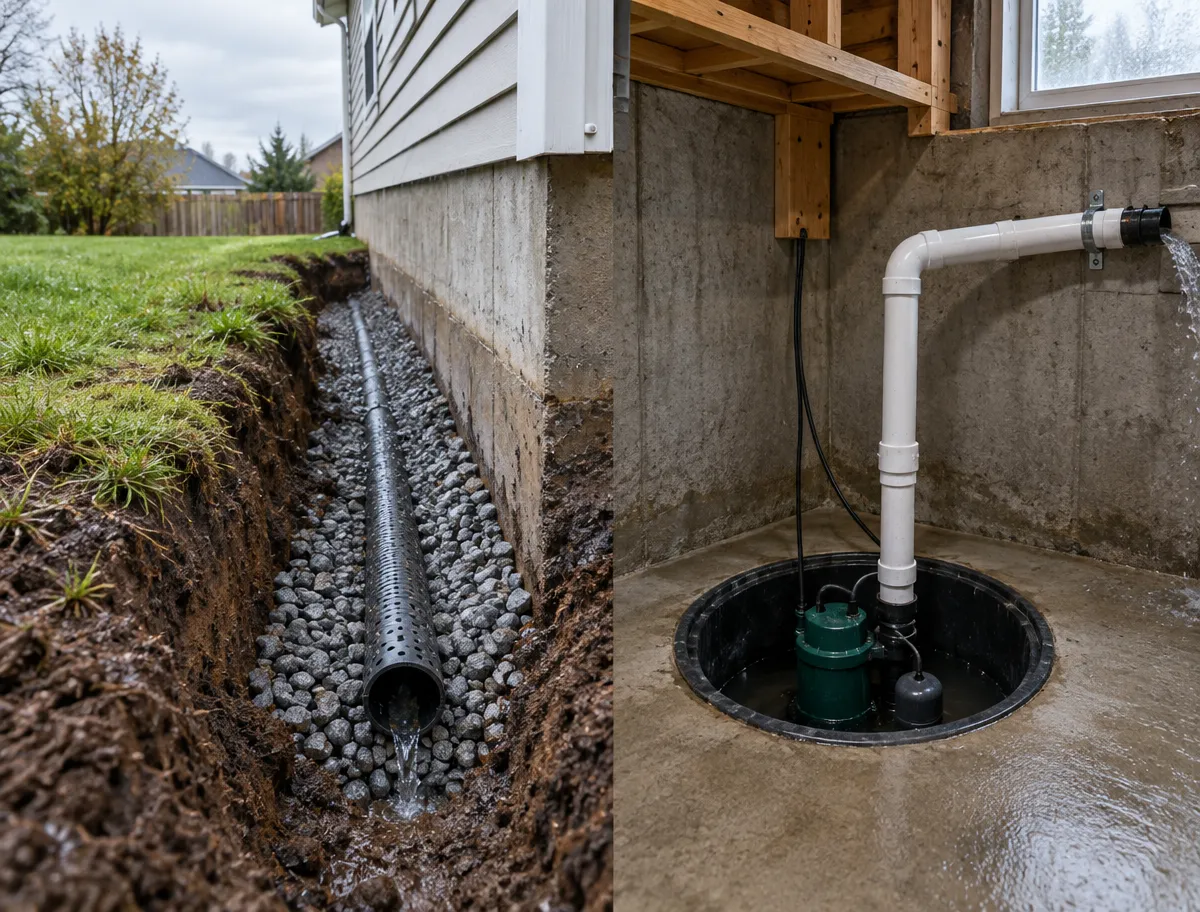
A French drain is a sloped trench lined with filter fabric, filled with washed gravel, and fitted with a perforated pipe. Water seeping through saturated soil finds the gravel, the path of least resistance, enters the pipe through its holes, and flows downhill to an outlet such as a lower part of the yard or a dry well. Because gravity does the work, there is nothing to switch on and no motor to wear out.
Exterior French drain installation intercepts groundwater along the foundation or across a slope before it builds up against basement walls. Clemson Extension notes that a sump pump, French drain, or swale will physically move water in the yard, and French drains are especially useful where water runs toward the house or lingers in low spots. A well-installed system can last many years; McCandless estimates 15 to 25 years with proper installation and maintenance.
Does a French Drain Work Without a Sump Pump?
Yes, as long as there is enough slope to carry water by gravity to a lower outlet, often called draining “to daylight.” Flat lots and homes with deep basements may not have that grade. When the collection point sits lower than any place the water can drain to, a pump is needed to lift it out.
How Does a Sump Pump Protect Your Basement?
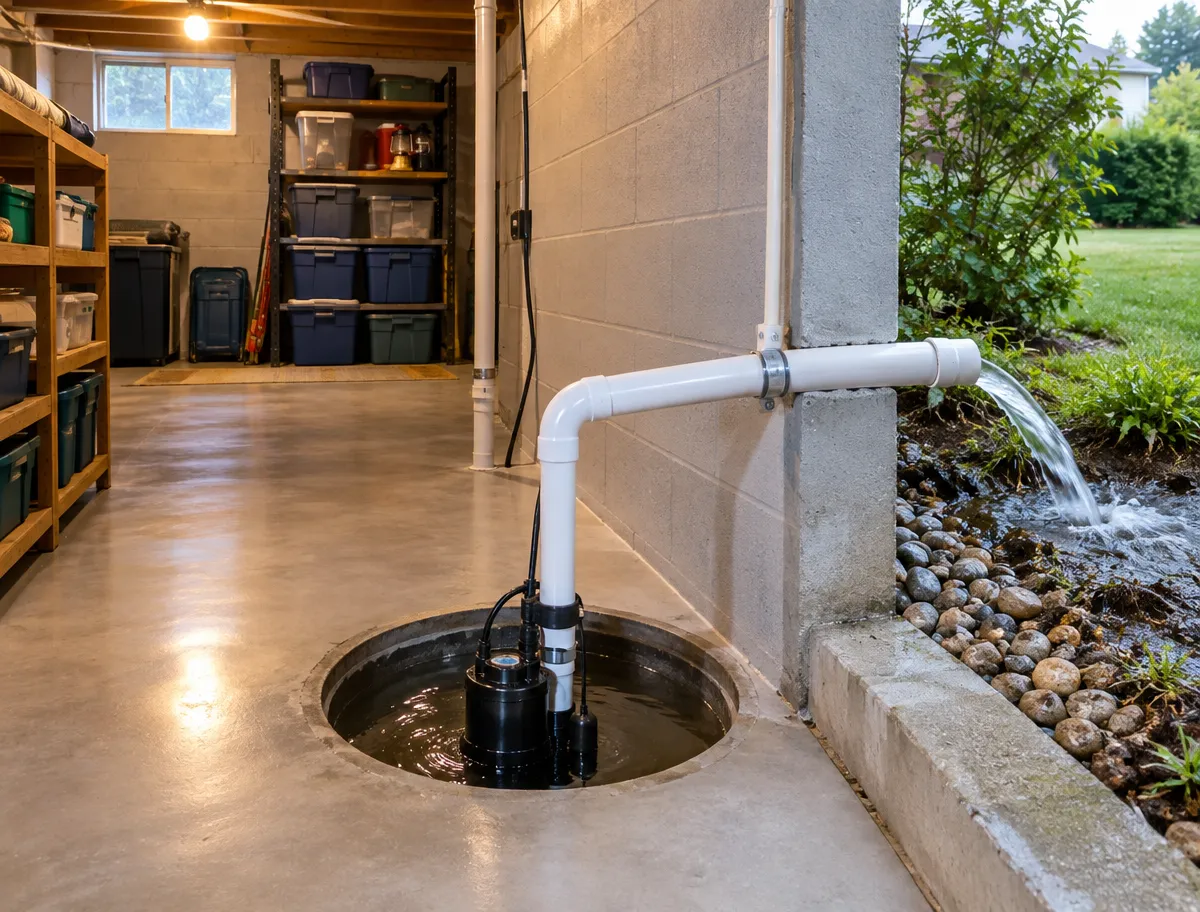
A sump pump sits in a pit at the lowest point of the basement floor. Water flows into the pit from interior drain tile or from groundwater rising under the slab. When the water level rises, a float switch turns the pump on, and the motor pushes the water out through a discharge line. University of Minnesota Extension describes how a sump pit pump lifts water to the ground surface outside the foundation, and notes that the below-grade water table can rise with flooding or seasonal conditions.
Where the water goes after it leaves the house matters too. HUD’s residential rehabilitation inspection guideline advises that sump discharge be located so it drains away from the building. Discharge lines also need protection from freezing in a Western New York winter. Homes on septic systems should never route sump water into the septic tank; Penn State Extension advises making sure sump pumps and subsurface drains are not connected to your septic system, because the extra water can overload it. If you are unsure how your home is plumbed, McCandless also handles septic system services.
What Happens When a Sump Pump Fails During a Storm?
The biggest weakness of a sump pump is that it depends on electricity, and heavy storms are exactly when power tends to go out. A failed pump can let water spread across the basement quickly, soaking flooring, drywall, and stored items. Wet materials should be cleaned and dried within 24 to 48 hours to help prevent mold, as the Massachusetts guidance on controlling excess moisture and mold explains. That is why McCandless recommends battery backup pumps that switch on automatically when the primary pump loses power. Find out more about pump types, backups, and repairs on our sump pump services page.
📞 Not Sure Which System Your Home Needs? Water in the yard and water in the basement call for different fixes. McCandless Plumbing & Excavation can look at your grading, basement, and where the water is coming from, then recommend a French drain, a sump pump, or both. Contact our team for a free estimate.
Which Problems Does Each System Solve Best?
The simplest way to decide is to start with the symptom. Use this decision table as a starting point:
| If you see this… | Usually start with… | Why |
|---|---|---|
| Standing water or soggy spots in the yard | French drain or other yard drainage | Gives surface and soil water a path away before it soaks in near the house |
| Water running downhill toward the house | French drain (curtain drain) uphill of the house | Intercepts water moving through the soil before it reaches the foundation |
| Water seeping in where the basement floor meets the wall | Interior drain plus sump pump | Collects water under the slab and pumps it out |
| Water rising up through the basement floor | Sump pump (often with interior drain tile) | Removes groundwater that collects below the basement floor |
| Both a soggy yard and a wet basement | Both systems | One handles water outside; the other removes what still gets in |
| Flat lot or deep basement with no downhill outlet | French drain feeding a sump pump | Water is collected by gravity, then lifted out by the pump |
Before investing in either system, check the basics. UMN Extension recommends correcting grading, gutters, and downspouts first, since those fixes alone may solve the problem. Routing roof water away with properly installed downspout drains is often the least disruptive first step.
Why Do Chautauqua County Homes Often Need Both?
Homes across Chautauqua County tend to get water from two directions at once, which is why one system alone sometimes falls short:
- Dense, clay-heavy soils: water soaks in slowly, pools on the surface, and stays pressed against foundation walls. The Chautauqua Watershed Conservancy points out that hard, packed lawn soil can act like pavement, sending runoff across the yard instead of letting it soak in.
- Spring snowmelt: months of snowpack melting at once saturate the ground and raise the water table around basements.
- Flat lots: without enough slope, a French drain may have no low point to drain to, so a pump has to finish the job.
- Older baseme