

Quick Answer: A standard residential well inspection in Western New York and Northwestern Pennsylvania typically costs about $250 to $550, covering the wellhead, casing, pump equipment, and a basic flow rate test. Adding laboratory water testing usually brings the total to about $350 to $800, and a combined well and septic inspection often runs about $400 to $900. Well depth, equipment age, and testing scope drive most of the difference. Prices are general guidance only and can change.
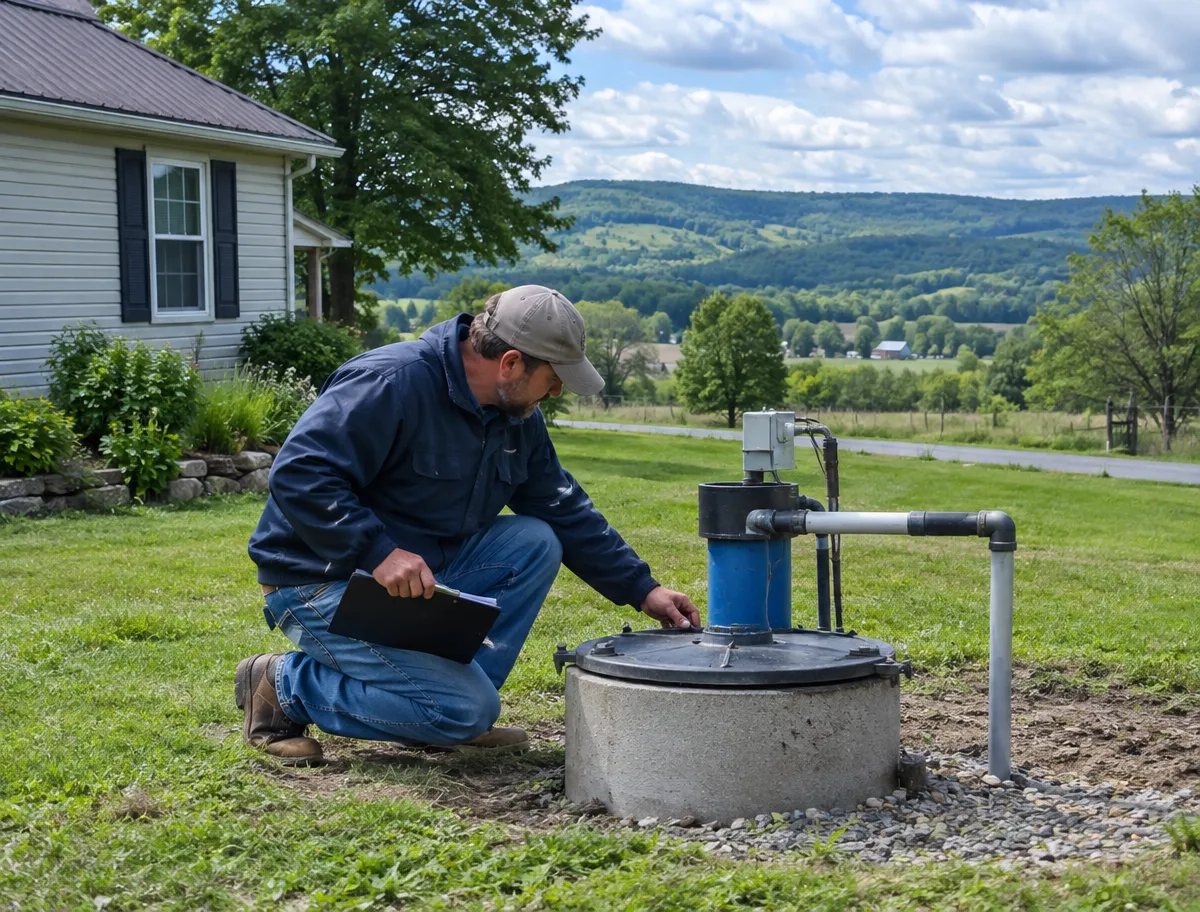
Well inspection costs in Western New York and Northwestern Pennsylvania typically range from $250 to $550 for a standard residential inspection. Adding water testing brings the total to $350–$800, while a combined well and septic inspection runs $400 to $900. Some lenders and loan programs may require well water testing or an inspection before closing, so check requirements with your lender early.
What Are the Key Takeaways on Well Inspection Cost?
- Standard well inspections cost $250 to $550 for residential wells in Western NY and Northwestern PA.
- Adding comprehensive water testing increases total inspection costs to $350 to $800 for complete assessment.
- Combined well and septic inspections run $400 to $900 depending on testing scope and complexity.
- Wells in our service area average 115 feet deep, though property-specific conditions determine actual drilling depth.
Why Does a Well Inspection Matter Before Closing?
Closing on a home with a private well without an inspection ranks among the costliest mistakes a buyer can make. A hidden pump failure, contaminated aquifer, or structural defect can surface weeks after the sale, leaving the new owner with repair bills no one budgeted for. For buyers and real estate professionals across Western New York and Northwestern Pennsylvania, that risk touches nearly every rural transaction. Private wells supply water to countless properties outside municipal service areas.
Many buyers ask one practical question before they ever schedule an appointment.
How much does a well inspection cost?
Costs shift based on location, well depth, and how much water testing gets included in the visit. A basic visual check covers the wellhead, casing, and flow rate. A fuller inspection adds laboratory water quality testing for contaminants and mineral content. Buyers across the region should request a detailed quote before closing, since testing scope drives most of the price difference.
Water quality testing matters just as much as mechanical condition. Across Western New York and Northwestern Pennsylvania, testing programs cover homes, farms, and businesses, checking for bacteria, hardness, and other contaminants that affect daily use. Skipping that step leaves buyers blind to problems a visual check alone can’t catch.
How Much Does a Well Inspection Cost?
A standard well inspection costs $250 to $550 for most residential wells across Western New York and Northwestern Pennsylvania. That range covers a licensed inspector’s visit, a check of the well cap, casing, and pump equipment, plus a basic flow rate test. Prices shift based on well depth, equipment age, and how much water testing a buyer or seller requests.
Water testing adds a second layer of cost. Once lab analysis for bacteria, nitrates, or minerals gets added, the total climbs to $350 to $800. Property buyers in rural Chautauqua or McKean County, where private wells are the norm rather than the exception, often find the extra testing worth the expense before closing.
What’s the difference between a basic and comprehensive inspection?
A basic visual inspection with flow rate testing runs $150 to $300. A comprehensive inspection, which includes full laboratory water testing, costs $400 to $800. The comprehensive option gives buyers a clearer picture of contaminants that a quick visual check can’t catch.
Does bundling a septic inspection save money?
Many real estate transactions in rural parts of Western New York and Northwestern Pennsylvania involve both a well and a septic system. A combined well and septic inspection costs about $400 to $900, which often runs lower than scheduling two separate visits.
| Inspection Type | Typical Cost |
|---|---|
| Basic visual + flow rate | $150 – $300 |
| Standard residential | $250 – $550 |
| With water testing | $350 – $800 |
| Comprehensive + lab testing | $400 – $800 |
| Combined well + septic | $400 – $900 |
Pricing note: The prices in this article are for general guidance only. Actual costs vary based on well depth, equipment, testing scope, location, and other factors, and pricing can change at any time. Contact McCandless Well Drilling and Services for a current, accurate quote.
These figures look modest next to the investment in a new well. A complete residential well system in the Jamestown, NY area, including drilling, casing, pump, and pressure tank, represents a much larger investment. Measured against that, a few hundred dollars for an inspection is a small price for peace of mind. McCandless Well Drilling and Services, Inc. encourages buyers and sellers throughout the region to treat inspection costs as protection, not an afterthought.
📞 Buying a Home With a Private Well? Schedule your well inspection early so results are in hand before closing. Contact McCandless Well Drilling and Services for a quote.
What Drives Inspection Costs in This Region?
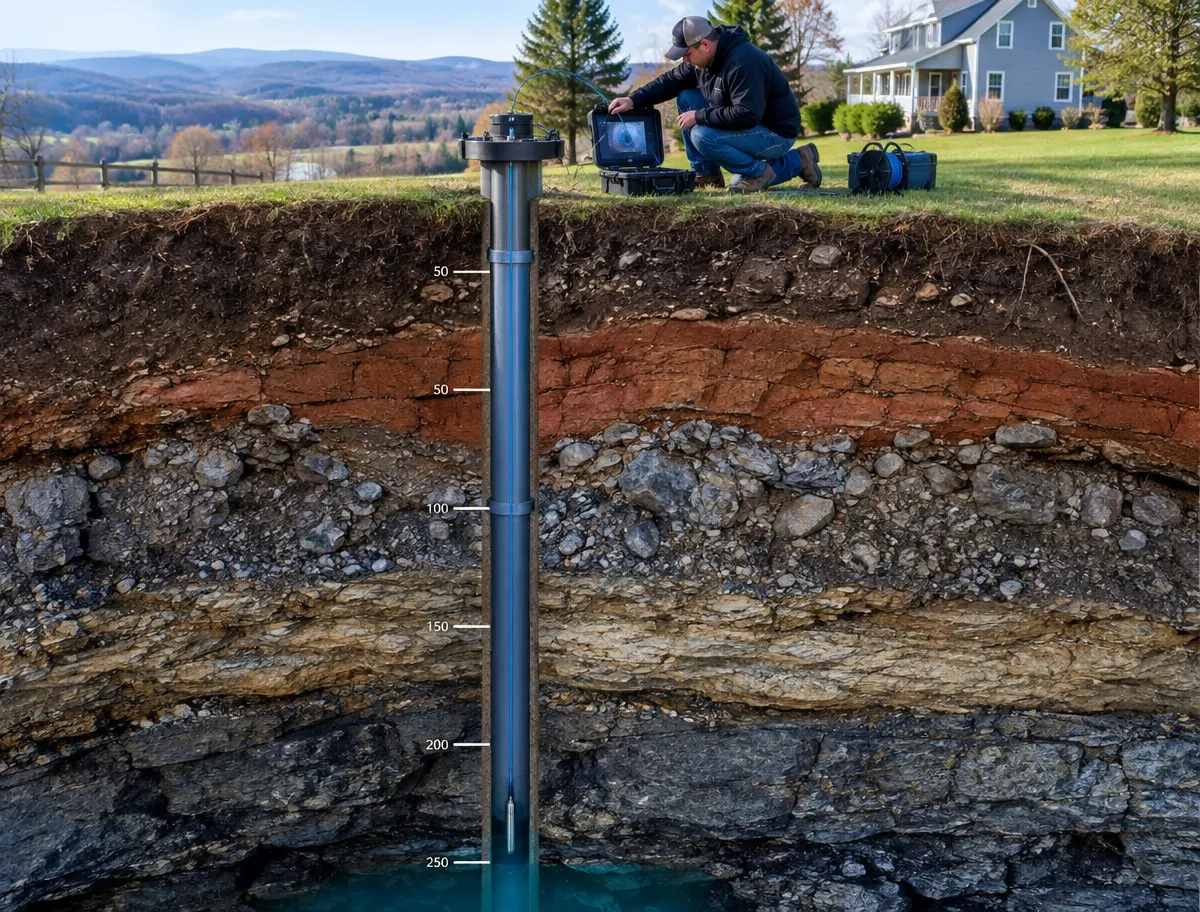
Well depth across Western New York and Northwestern Pennsylvania sets the single biggest cost variable for any inspection or flow test. Properties in Jamestown, NY typically have wells running 150 to 300 feet deep, with some reaching 400 feet or more depending on location and the yield required. A deeper well simply takes longer to assess, and that time shows up on the invoice.
Geology plays an equally large role. The water table across Chautauqua County generally sits 20 to 100 feet below the surface. Drillers must often go much deeper into bedrock to secure a reliable flow of 4 to 5 gallons per minute. Inspectors testing a shallow sand-and-gravel well in a valley spend less time on-site than those evaluating an upland bedrock well drilled past 200 feet. Terrain, not just distance from a service hub, shapes how much does a well inspection cost for any given property.
Does the type of well change the inspection price?
Yes. Inspection scope differs for residential, agricultural, and commercial water wells, since each serves different flow and capacity needs. A farm well supplying livestock requires different flow-rate benchmarks than a household system. Commercial wells often need broader water-quality panels. McCandless Well Drilling and Services, Inc. works with all three well types throughout the region, so inspection pricing adjusts to match the system being evaluated.
Factors that typically increase inspection time and cost include:
- Well depth beyond 200 feet, common in upland bedrock areas
- Bedrock drilling versus shallower sand-and-gravel valley wells
- Well type (residential, agricultural, or commercial)
- Required flow-rate testing to confirm adequate gallons-per-minute output
Buyers and sellers in Jamestown and the surrounding counties should expect inspection scope, not just square footage or home price, to drive the final cost.
What Does a Full Well Inspection Include?
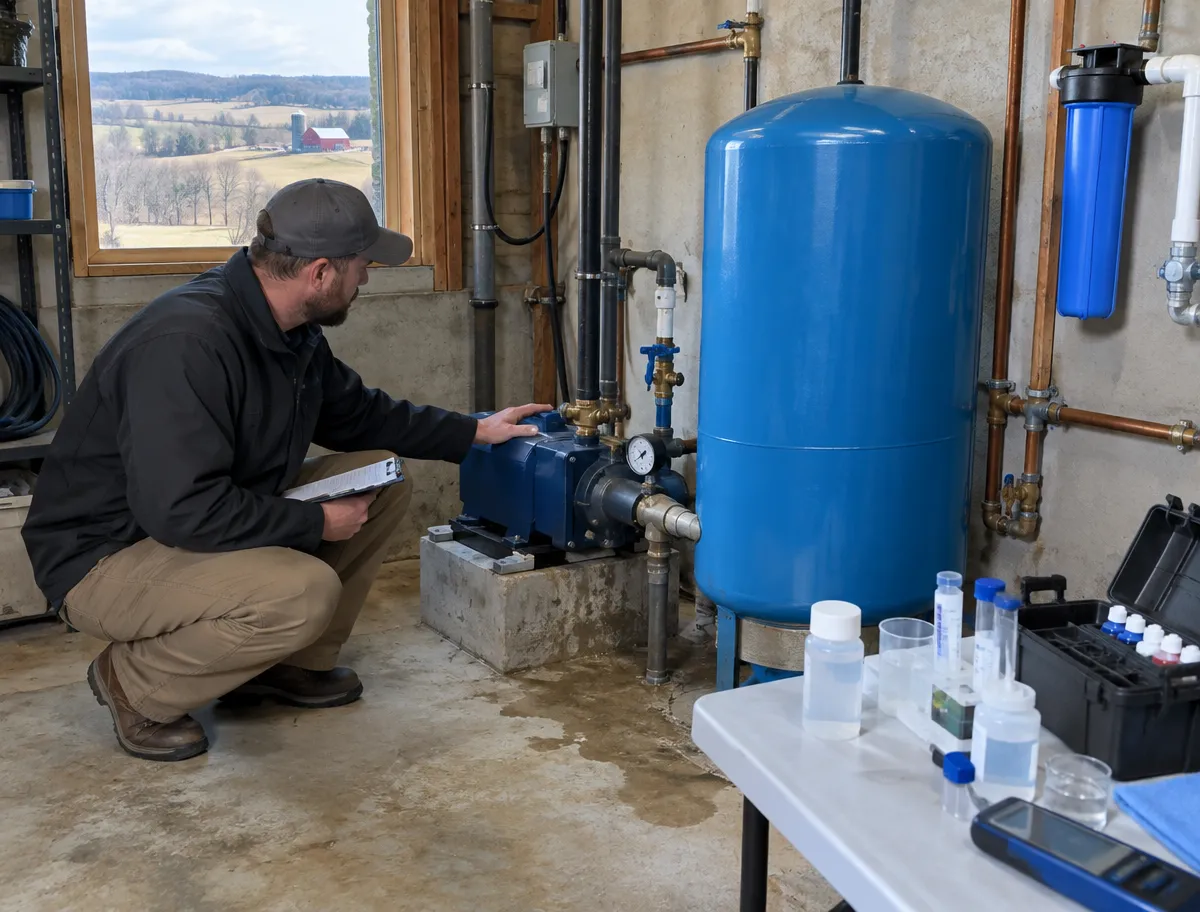
A full well inspection examines the mechanical heart of the system: the pump, the pressure tank, the wiring, and the water itself. For homeowners and buyers across Western New York and Northwestern Pennsylvania, understanding how much does a well inspection cost starts with knowing what an inspector actually checks before any dollar figure makes sense.
Pump condition tops the list. Most drilled wells across the region run on submersible pumps, which suit wells deeper than 25 feet. Shallower wells typically rely on a jet pump instead. McCandless Well Drilling and Services, Inc. installs and services Franklin Electric, Goulds, and Flint & Walling pumps, each backed by a 5-year warranty on the pump itself and a 7-year warranty on bladder tanks. An inspector checking these components wants to see whether they still fall within warranty coverage. Whether sizing matches the property’s water demand, rather than assuming a one-size-fits-all package was installed.
What components get inspected beyond the pump?
Pressure tanks, wiring connections, and the wellhead seal all get a close look during a standard visit. Inspectors also check for proper grouting and casing integrity, since gaps there invite surface contamination into the water supply.
Is a camera inspection part of a standard visit?
Not always. A camera or video inspection is typically an add-on service, which adds to the cost, and it gives a direct, visual look inside the casing. This step helps confirm structural condition in older wells common throughout rural Western NY and NW PA properties.
A thorough inspection typically covers:
- Pump type, age, and performance under load
- Pressure tank condition and bladder function
- Wiring and electrical connections
- Wellhead seal, casing, and grouting integrity
- Optional camera/video review of the casing interior
Skipping any of these checkpoints leaves buyers and homeowners guessing about costly repairs waiting just below the surface.
What Should You Do Next?
Three steps matter most after any inspection result on a private well in Western New York or Northwestern Pennsylvania: schedule follow-up testing, address mechanical issues promptly, and keep the wellhead protected year-round. Property buyers and homeowners in the region benefit from treating inspection day as the start of a maintenance routine, not a one-time event. Periodic water testing catches changes in quality before they become health concerns. An occasional pump and pressure-tank checkup prevents small mechanical problems from turning into costly failures. Keeping the wellhead area clear of debris, with the cap properly sealed, blocks surface contaminants from reaching the water supply.
What if the inspection finds a water quality problem?
Many wells across the region turn up hardness, iron, or bacteria during testing. McCandless Well Drilling and Services, Inc. provides whole-house filtration, water softening, reverse osmosis, and UV purification to resolve these issues directly. Pairing inspection results with the right treatment system protects both the household and the long-term value of the property.
How does timing work for a new well near closing?
Buyers planning around a real estate closing in Western NY or NW PA should build in lead time. For a newly drilled well, the full process, from first permit application to water flowing through the tap, usually runs 2 to 4 weeks. Coordinating that timeline with an inspection schedule avoids last-minute surprises.
| Action | Why It Matters |
|---|---|
| Retest water periodically | Confirms quality stays consistent over time |
| Check pump and pressure tank | Prevents mechanical failures before they start |
| Seal the wellhead cap | Keeps surface contaminants out |
Jamestown, New York based McCandless Well Drilling and Services, Inc. serves communities throughout Western NY and Northwestern PA for pump, pressure, and water quality follow-up work after inspection.
Frequently Asked Questions
How much does a standard well inspection cost in Western New York and Northwestern Pennsylvania?
A standard residential well inspection costs about $250 to $550, covering the inspector’s visit, a check of the well cap, casing, and pump equipment, plus a basic flow rate test.
How much does adding water testing increase the inspection cost?
Adding laboratory water testing for bacteria, nitrates, or minerals brings the total cost to about $350 to $800 (general guidance; prices can change), giving buyers a clearer picture of contaminants a visual check alone can’t catch.
How much does a combined well and septic inspection cost?
A combined well and septic inspection runs $400 to $900 depending on the testing scope and complexity involved in assessing both systems. Prices are general guidance only and can change.
Is a well inspection required to buy a home with a private well?
Requirements vary by lender, loan program, and local rules, so ask your lender and agent early. Even when it is not required, an inspection and water test help buyers avoid costly surprises after closing.
How long does a well inspection take?
Most standard inspections are completed in a single visit, but lab water test results usually take additional time to come back, so build that into your closing timeline.
TL;DR — Well Inspection Cost in Western NY and NW PA at a Glance
- A standard residential well inspection often runs about $250 to $550 (general guidance; actual prices vary).
- Adding lab water testing often brings the total to about $350 to $800 (general guidance; actual prices vary).
- Well depth, equipment age, well type, and testing scope drive the price.
- A full inspection checks the pump, pressure tank, wiring, wellhead seal, casing, and water quality.
- Water problems like hardness, iron, or bacteria can usually be treated with the right system.
- Next step: Contact McCandless Well Drilling and Services for a well inspection quote.
Related Resources
- Water Well Repair
- Jamestown, NY Well Services
- Private Well Water Quality in Western NY and NW PA
- Well Water Testing Guide for Erie County
- PFAS in Private Wells in Western NY and NW PA
- Signs Your Well Pump Needs Repair
Get a Free Well Inspection Quote
In closing, understanding well inspection costs in Western New York and Northwestern Pennsylvania requires considering the specific factors that influence pricing in your region. By recognizing what drives these expenses, from your well’s age and condition to local water quality concerns, you make informed decisions about protecting your water supply. McCandless Well Drilling and Services stands ready to provide the expert assessment your property deserves, ensuring your well operates reliably for years to come.
Contact McCandless Well Drilling and Services today for a free, no-obligation well inspection quote in Western NY or Northwestern PA.
About McCandless Well Drilling and Services: McCandless Well Drilling and Services, Inc. is based in Jamestown, New York and serves communities throughout Western New York and Northwestern Pennsylvania. The team provides well drilling, pump and pressure tank service, well repair, and water treatment, including filtration, softening, reverse osmosis, and UV purification. Contact McCandless for a quote.