

Replacing galvanized pipe throughout a typical Chautauqua County home generally runs $4,000 to $15,000, depending on your home’s size, number of bathrooms, and whether the pipes are easily accessible or run behind finished walls. If you’re seeing brown or rusty water, weak pressure at every fixture, or visible rust at pipe joints, and your home was built before the 1960s, there’s a good chance galvanized steel is the reason — and it’s a manageable, well-understood project, not the plumbing emergency it can feel like.
What Galvanized Pipe Is, and Why It Fails
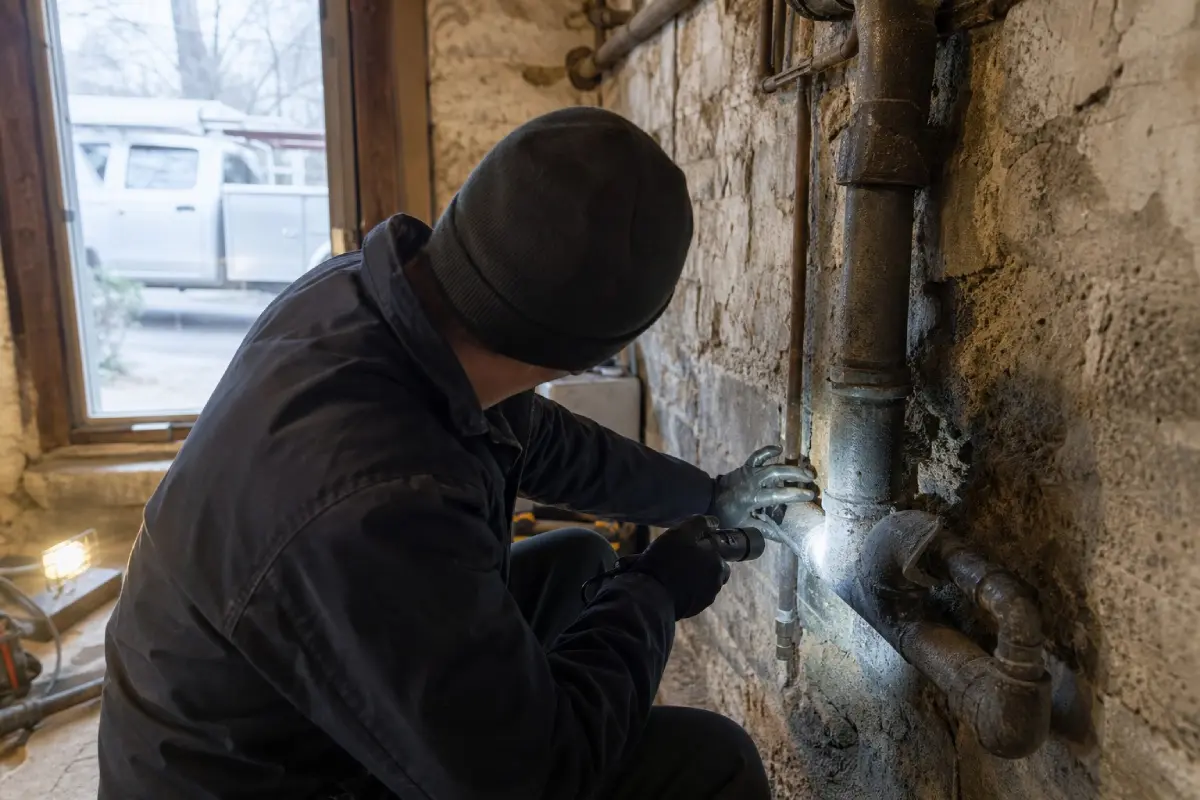
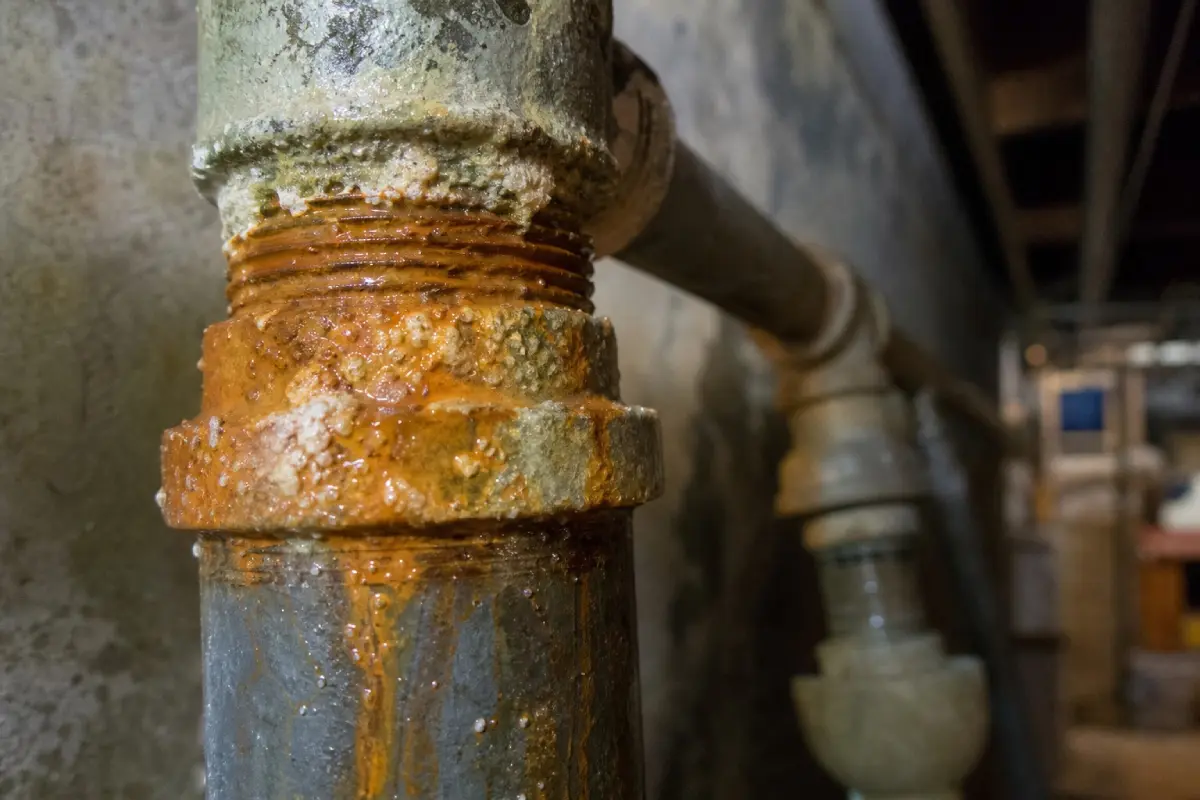
Galvanized pipe is steel pipe coated in zinc to resist corrosion — the standard for home plumbing through the 1950s and into the 1960s in much of Chautauqua County. The zinc coating was never meant to last forever. Once it wears away from decades of water flow, the bare steel underneath begins rusting from the inside out. That internal rust and mineral scale don’t just discolor your water — they physically narrow the pipe’s interior diameter, which is why low pressure throughout the whole house is one of the clearest signs of galvanized pipe nearing the end of its life.
Signs It’s Time to Replace
- Brown or rusty water: especially noticeable after periods of no water use, like first thing in the morning or after a vacation.
- Low pressure throughout the house: not just one fixture — if every tap and shower is weaker than it used to be, internal corrosion is narrowing the pipe diameter.
- Visible rust at joints: any exposed galvanized pipe in a basement or crawlspace showing rust buildup at threaded connections.
- Frequent pinhole leaks: recurring small leaks in different spots are a sign the whole system is deteriorating, not just one bad section.
- Home age: if your Chautauqua County home was built before the 1960s and still has its original plumbing, galvanized pipe is a reasonable assumption until proven otherwise.
What Galvanized Pipe Replacement Costs in NY
A full interior repipe for a typical single-family Chautauqua County home generally falls between $4,000 and $15,000, with the total driven mainly by home size, number of bathrooms and fixtures, and how much of the piping runs behind finished walls versus in an accessible basement. Smaller, more accessible homes land toward the lower end; larger homes or ones requiring more drywall access and repair land toward the higher end. For pipe repair limited to a single failing section rather than a full repipe, costs are considerably lower — often a few hundred dollars for an accessible repair. If your issue is specifically the underground service line rather than interior plumbing, main water line replacement is priced separately, generally $2,500-$7,500.
| Repair vs. full repipe: if you’re patching the same section of galvanized pipe more than once, or dealing with rust in multiple locations, spot repairs are usually a temporary fix on a system that’s failing throughout — a full repipe is typically the more economical choice at that point rather than an ongoing series of repair calls. |
Material Options: Copper vs. PEX
Most Chautauqua County repipes today use either copper or PEX piping, each with real tradeoffs rather than one being universally better.
| Copper | PEX | |
| Typical lifespan | 50+ years | 40-50 years |
| Freeze resistance | Can burst if frozen | Flexes, freeze-resistant |
| Installation | Soldered joints, more labor | Faster install, fewer joints |
| Relative cost | Higher material + labor cost | Generally lower overall cost |
| Best fit for Western NY | Exposed runs, code requirements in some areas | Most whole-house repipe applications |
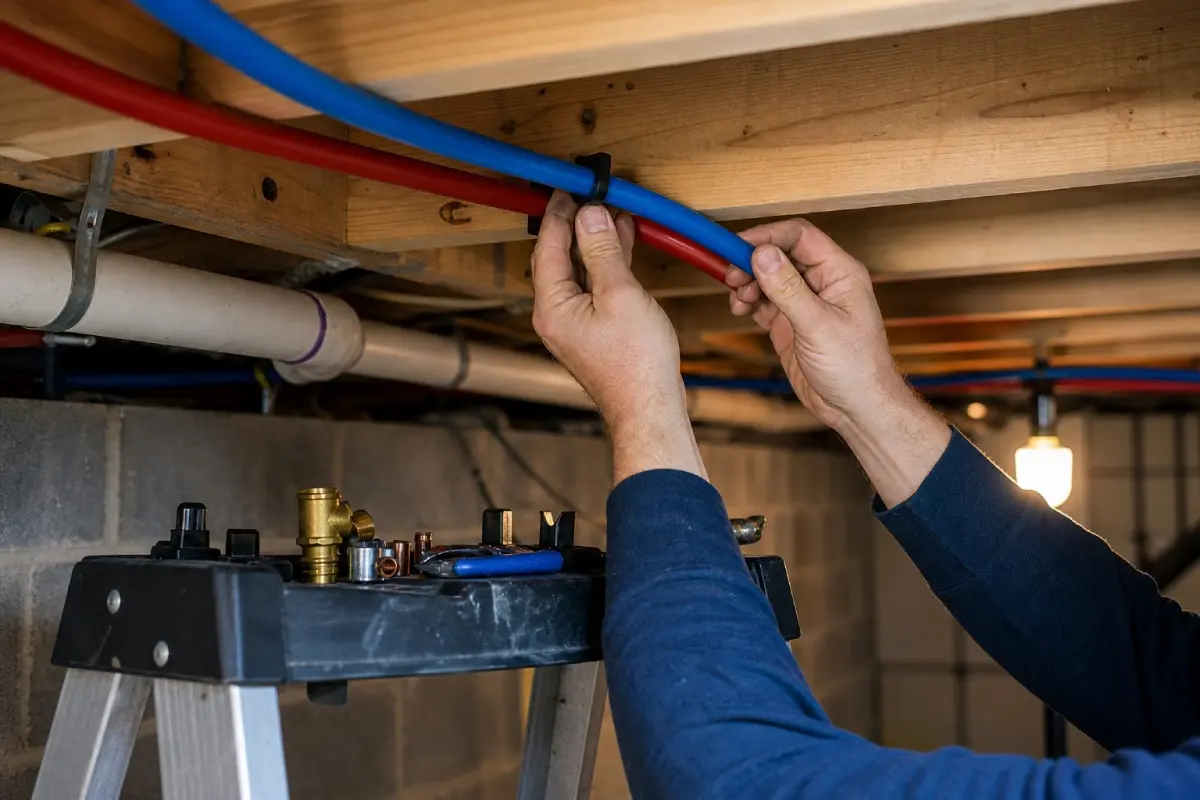
For most whole-house repipe projects in this region, PEX has become the more common choice due to its freeze resistance and faster installation — a meaningful advantage given Western NY winters — though copper remains a solid choice, particularly for exposed runs or where local code specifies it.
How Long a Full Repipe Takes
A whole-house repipe for a typical single-family home generally takes 2 to 5 days, depending on home size and how much wall or ceiling access is needed to reach existing pipe runs. Most of your water service is only interrupted for short windows during the transition between old and new piping, and a professional crew will plan access points to minimize drywall work and keep the home livable throughout the project.
This Is a Manageable Project
A galvanized repipe understandably sounds like a major undertaking, but it’s one of the most well-understood plumbing projects a licensed contractor handles — not exploratory work, but a known process with a predictable scope once your home’s pipe layout is assessed. A short disruption during the project itself is the tradeoff for permanently solving pressure and water quality issues that would otherwise keep recurring.
Frequently Asked Questions
How do I know if I have galvanized pipes?
Galvanized pipe has a dull gray, slightly rough surface and is magnetic — a magnet will stick to it, unlike copper or plastic pipe. Threaded joints are another giveaway, since copper and PEX use different connection methods. If your home was built before the 1960s and you haven’t had a repipe, galvanized is a reasonable starting assumption.
Can I replace just the worst sections of galvanized pipe instead of the whole house?
Yes, for an isolated failure. But if multiple sections are showing problems, or you’re calling for repeat repairs, spot replacement usually just delays a full repipe rather than avoiding it, since the rest of the system is corroding on the same timeline.
Is copper or PEX better for a Western NY home?
Both work well. PEX’s flexibility and freeze resistance make it the more common choice for a full repipe in this climate, while copper remains a solid option, particularly for exposed runs or specific code requirements. A licensed plumber can recommend based on your home’s specific layout.
Will replacing galvanized pipe improve my water pressure immediately?
Yes, typically right away. Since the primary cause of pressure loss is internal corrosion narrowing the pipe diameter, replacing the pipe removes that restriction and restores full flow as soon as the new system is in service.
Galvanized pipe doesn’t fail all at once — it’s a slow decline that eventually shows up as brown water, weak pressure, and recurring leaks. Catching it and planning a repipe on your own timeline, rather than after a pipe fails outright, is what keeps this a manageable home improvement project instead of an emergency.
Choose McCandless Plumbing & Excavation for Your Repipe
McCandless has served Jamestown and Chautauqua County for over 50 years, with licensed technicians experienced in the galvanized, cast iron, and Orangeburg pipe common throughout the region’s pre-1970 housing stock.
Contact us today for a straightforward assessment of your galvanized plumbing and an honest repipe estimate.
| Still on galvanized pipe? Let’s find out what that means for you.
McCandless offers a free pipe assessment for Chautauqua County homes — no pressure, just a clear answer on what your plumbing actually needs. Schedule a Free Pipe Assessment (716) 403-2478 |