

Quick Answer: French drain installation in Jamestown, NY typically costs $25 to $85 per linear foot, depending on drain type, trench depth, and how heavy the local clay soil is. A crew assesses where water collects, picks an outlet, digs a sloped trench, lays gravel and a perforated pipe wrapped in filter fabric, then backfills and restores the surface. Exterior yard drains cost less than interior basement drains, which often need concrete work and a sump pump. Most residential jobs finish within a few days.
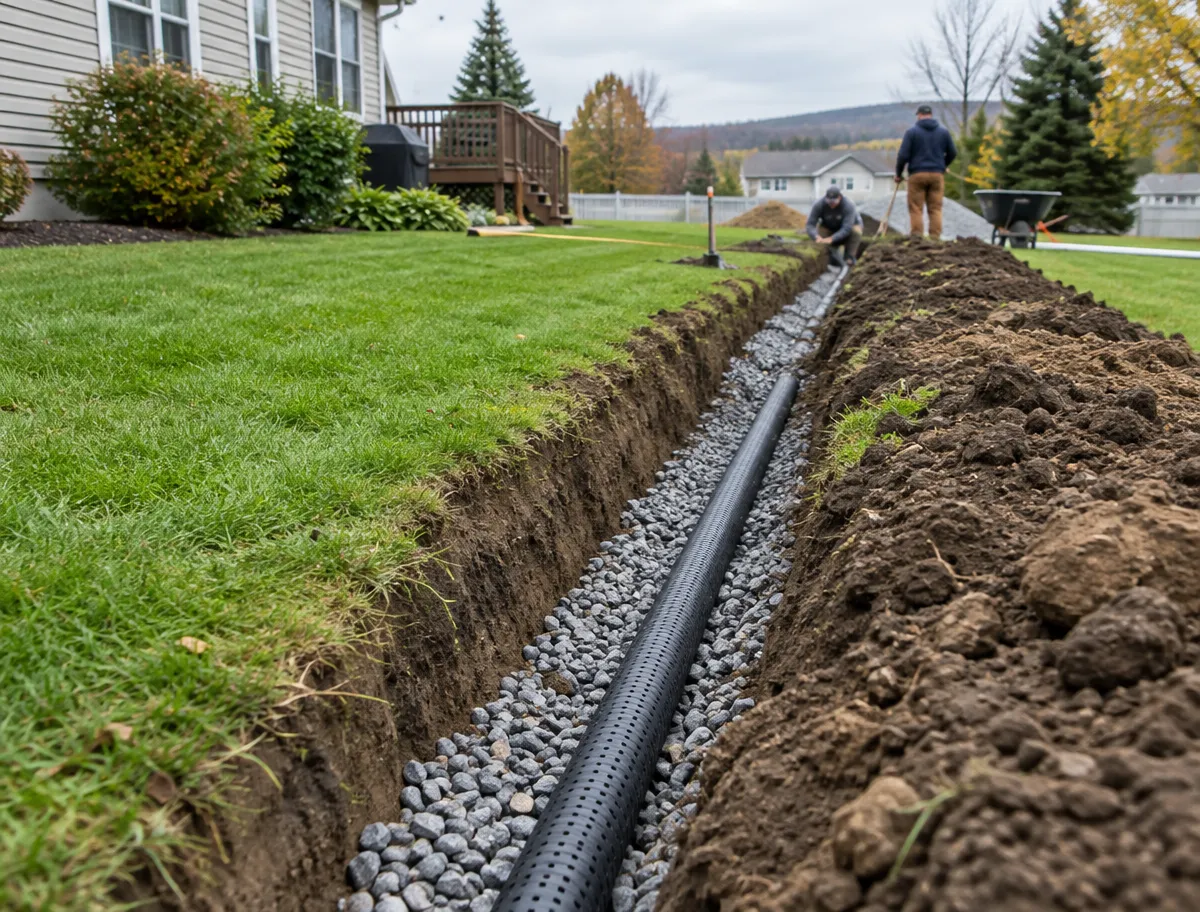
Jamestown, NY homeowners facing clay soil drainage issues can expect French drain pricing that varies by project scope, often running $25 to $85 per linear foot depending on depth and drain type. McCandless Plumbing & Excavation installs exterior foundation drains, interior basement drains, and yard drains, matching the system to each property’s specific water problem and soil conditions.
Why Do Jamestown Yards Flood So Often?
Clay-heavy soil across Jamestown, NY drains slowly, trapping rainwater near the surface. Homes throughout Chautauqua County sit on ground that holds moisture instead of releasing it, turning ordinary rainstorms into standing water problems. Basements take on dampness, lawns turn soggy, and foundations absorb pressure they were never built to withstand. Cornell’s soil drainage and water management study guide explains why fine-textured, poorly drained soils like these stay saturated long after a storm passes.
Soil composition is not the only factor at play. Local regulations vary by municipality, and labor availability shifts both pricing and project timelines across the region. Soil type and local rules together carry major weight in what excavation work costs in Chautauqua County, shaping the scope of a project and its final price tag.
A few mechanics explain why so many properties struggle after storms:
- Groundwater accumulates against foundation walls following heavy rain
- Compacted clay slows infiltration, forcing water to pool at the surface
- Poor grading directs runoff toward the house instead of away from it
- Aging or missing drainage systems leave water nowhere to go
Spring snowmelt adds another layer. The NYS Department of Environmental Conservation describes stormwater runoff from rain and melting snow as water that doesn’t soak into the ground, which is exactly what happens on saturated Jamestown clay each thaw.
What Problems Does Standing Water Actually Cause?
Untreated water buildup produces soggy yards, flooded basements, and eventual foundation damage. Left alone, hydrostatic pressure pushes against foundation walls and gradually weakens the structure. A properly planned French drain installation in Jamestown, NY interrupts that cycle before water ever reaches the house.
McCandless, based in Jamestown, NY, brings firsthand familiarity with local soil and drainage patterns to every job. The company covers the full range of residential and commercial water work throughout the area, including drainage and excavation services built around Chautauqua County’s clay-heavy conditions.
What Does French Drain Installation Cost in Jamestown, NY?
Homeowners planning French drain installation Jamestown NY projects should expect pricing that varies by project scope, often running $25 to $85 per linear foot depending on drain type, trench depth, and how heavy the soil is. Jamestown’s clay-heavy ground often means deeper trenches and slower digging, which pushes some projects toward the higher end of that range.
Pricing breaks down differently depending on where the drain goes and what it’s designed to solve.
| Drain Type | Typical Cost Range | Notes |
|---|---|---|
| Exterior yard drains | Priced by depth and length | Price depends on depth and total length |
| Interior basement drains | Priced by scope and concrete work | Frequently paired with a sump pump |
Why does excavation cost extra on top of materials?
Excavation is usually billed as its own line item, separate from pipe, gravel, and permit fees. In a typical drainage project, excavation carries its own cost. Tank or trench materials and permits are priced independently. Property owners should expect a quote that itemizes digging labor apart from the drainage components themselves. Soil conditions and access can change excavation time significantly. Permit questions for work inside city limits go through the City of Jamestown’s Department of Development, which handles building permits and code enforcement.
Are basement drains more expensive than yard drains?
Yes. Interior basement systems cost more than exterior yard drains because they often involve breaking and repairing concrete flooring. Many basement installations also require adding a sump pump system to move collected water out of the home, which adds both equipment and labor cost. Yard drains, by contrast, stay closer to the surface and skip the concrete work entirely, keeping their price lower.
Property owners weighing a soggy yard against a damp basement should expect the interior fix to cost more. It often solves a more serious water problem. FEMA’s basement flood mitigation guide shows how much cleanup and mold prevention a wet basement can require once water gets inside.
📞 Want a Real Number for Your Property? McCandless Plumbing & Excavation will walk your Jamestown yard or basement, find where the water collects, and give you an itemized French drain quote covering excavation, materials, and restoration. Call today to schedule your drainage assessment.
What Types of French Drains Fit Your Property?
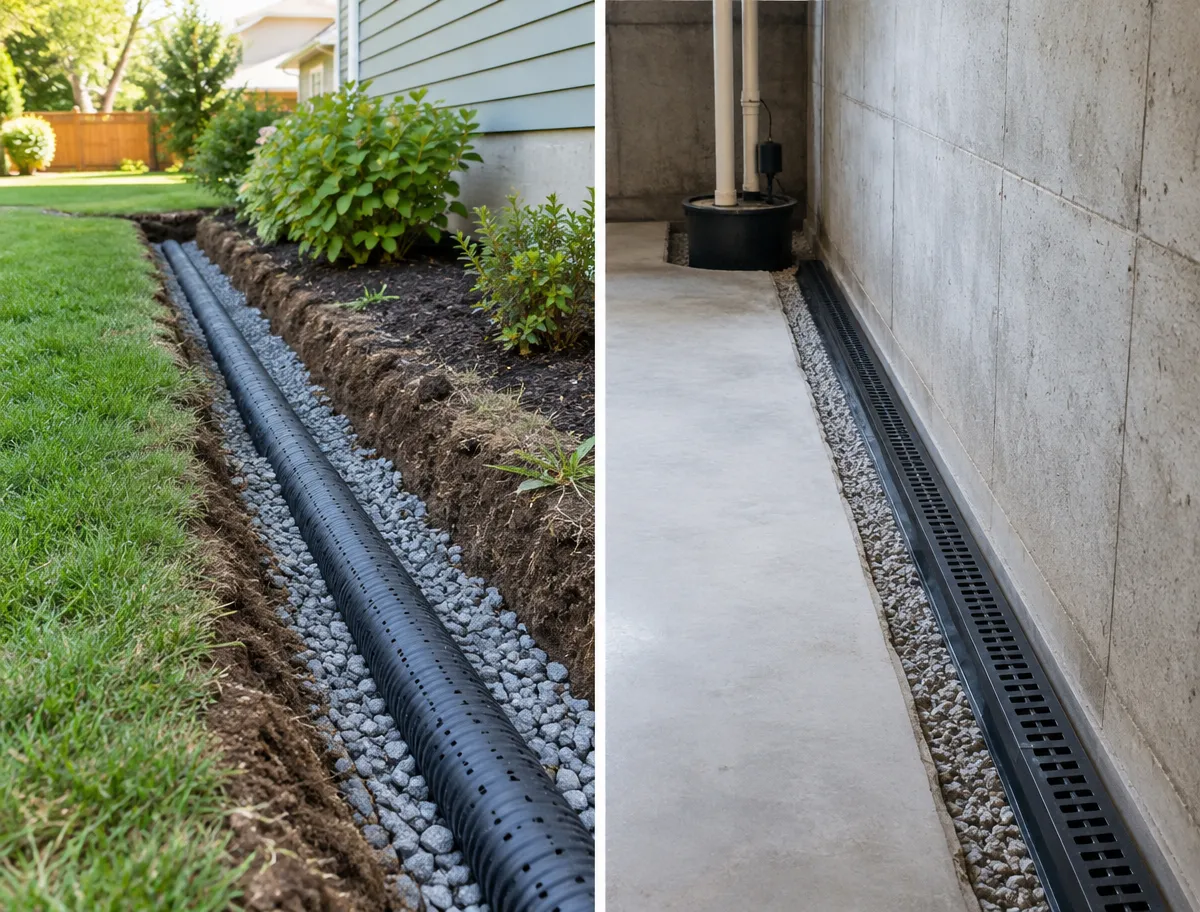
Four distinct drain configurations address the specific water problems Jamestown, New York properties face, from clay-heavy soil that traps runoff to basements sitting below grade near Chautauqua Lake. Matching the right system to the right problem determines whether a property stays dry through spring thaw and summer storms. A skilled French drain installation Jamestown NY contractor evaluates soil composition, grading, and structure type before recommending a design.
Exterior foundation curtain drains sit closest to the home’s perimeter. These systems intercept groundwater before it reaches basement walls, easing the hydrostatic pressure that pushes against foundations and eventually causes cracking. Interior basement drain tile serves as a backup plan. When exterior excavation isn’t practical, this system captures water already inside the basement and channels it to a sump pump for removal.
Yard and landscape drains solve a different headache entirely: standing water in low spots. Shallow trench systems clear pooling from gardens, side yards, and depressions where soggy turf becomes a recurring nuisance. For broader grading and runoff fixes, see McCandless’s yard drainage solutions.
| Drain Type | Best For |
|---|---|
| Exterior foundation curtain drain | Groundwater near basement walls |
| Interior drain tile | Existing basement water, sump pump routing |
| Yard/landscape drain | Surface pooling in low areas |
| Driveway/walkway drain | Paved surfaces prone to frost damage |
Do driveway drains really matter in a Jamestown winter?
Yes. Water pooling on driveways and walkways freezes and thaws repeatedly through Western New York winters, accelerating frost damage. Driveway and walkway French drains keep water from collecting on paved surfaces, extending the life of concrete and asphalt.
How Does the Installation Process Actually Work?
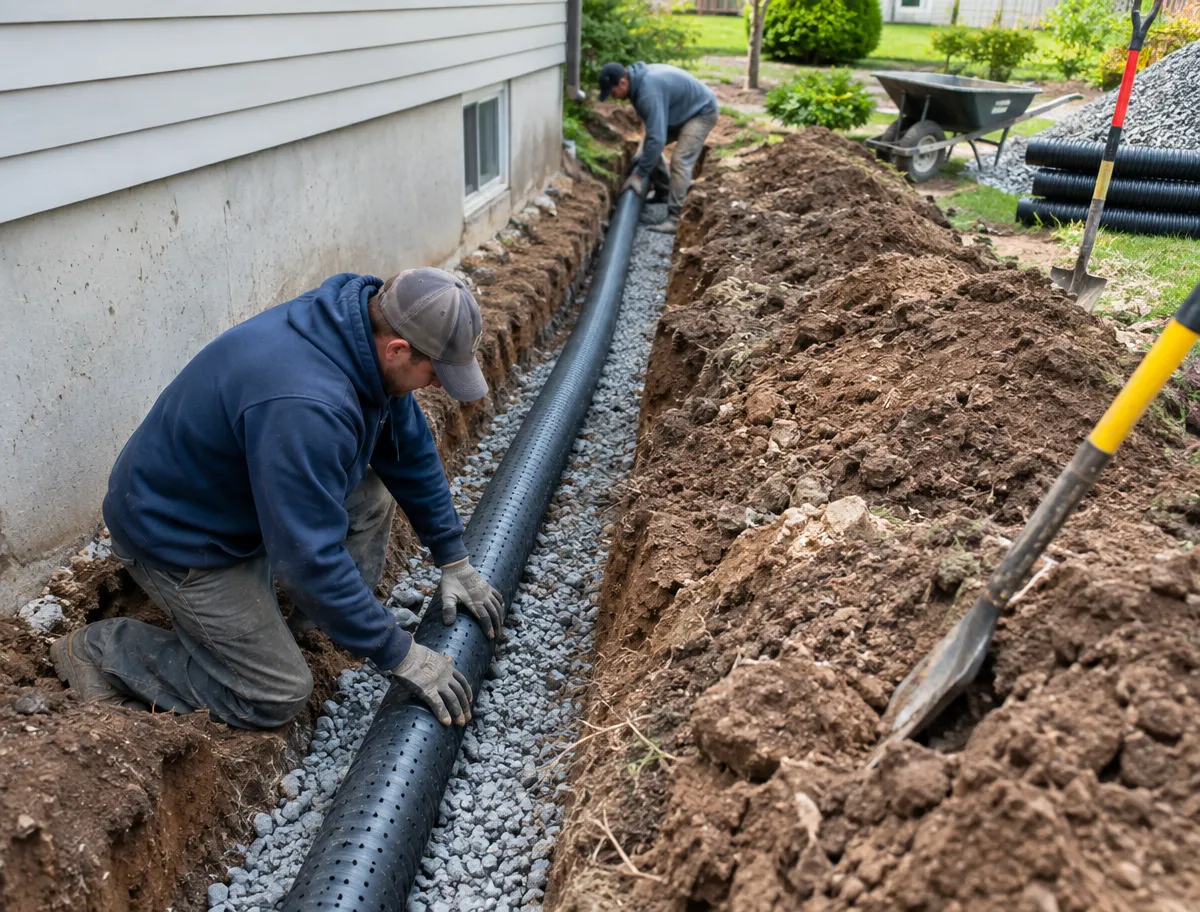
Installation begins with a site assessment, not a shovel. A qualified crew locates exactly where water collects on a Jamestown property and determines where that runoff should ultimately go, whether toward a storm drain, a dry well, or another approved discharge point. Clay-heavy soil common across Chautauqua County makes this planning step especially critical. Dense clay slows natural absorption and worsens pooling. Penn State Extension’s overview of an underground outlet that carries stormwater through buried pipe shows why the discharge point matters as much as the drain itself.
Once the destination is set, excavation follows a clear sequence.
What actually goes into the trench?
A properly built French drain installation Jamestown NY relies on a trench packed with gravel and a perforated pipe running through it. That pipe captures both surface water and the water moving beneath the soil, then channels it away from the foundation, yard, or low-lying area causing trouble.
The p